When Do Chickens Start Laying Eggs? Age and Signs
Updated October 26, 2026 · Fact-checked against university extension sources (how we check)
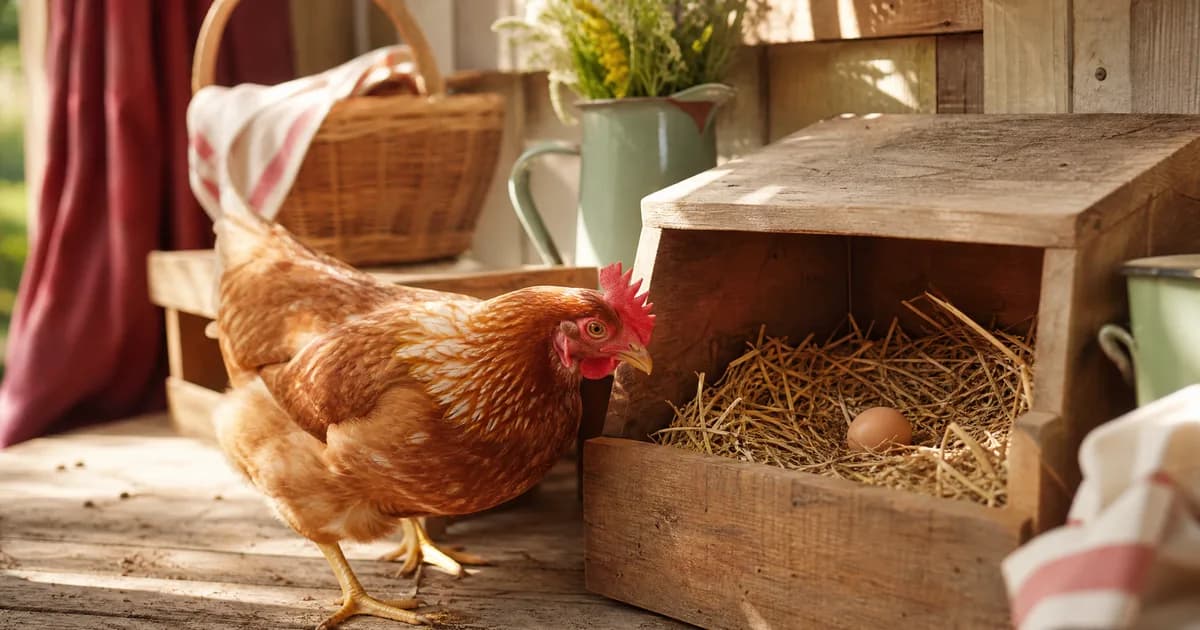
You've raised them from fluffy chicks, built the coop, and now you check the nest box every morning. When do the eggs actually start? Here's what extension specialists say about timing, the signs to watch for and what to do to get ready.
Want dates instead of weeks? Our free Laying Calculator turns your pullets' hatch date into a first-egg window, with a daylight check for your state. And our Egg Log is ready for egg number one.
At what age do chickens start laying?
Most pullets lay their first egg at around 4 to 5 months old, but sources give slightly different windows:
| Source | Age at first egg |
|---|---|
| Oregon State University Extension | 18 to 20 weeks |
| Mississippi State University Extension | 18 to 22 weeks |
| University of Florida IFAS | 18 to 22 weeks, "depending on the breed and season" |
| Texas A&M AgriLife Extension | Leghorns "at about 5 months of age" |
| Utah State University Extension | "About 5 to 7 months," varying "considerably depending on breed and strain" |
Pullets don't hit full stride right away. Oregon State says a hen reaches peak production at about 35 weeks of age.
What affects when pullets start laying
Breed and strain
Mississippi State notes that "lighter breeds tend to mature faster than heavier breeds," so lightweight layers like Leghorns tend to start at the early end and heavier breeds later. Utah State stresses that it varies "considerably depending on breed and strain."
Daylight and season
Day length is a big trigger. Texas A&M AgriLife Extension explains that "increasing day length stimulates maturing pullets to lay," and Florida IFAS lists season as a factor in timing.
Timing your chicks helps. University of New Hampshire Extension says "purchasing chicks in the spring (April or May) will result in eggs appearing around July or August."
If you use lights, extension guidance is to hold back while pullets grow, then add light at laying age:
- Texas A&M: "do not expose pullets to artificial light until 18 weeks of age," then "at about 18 weeks of age, pullets should be placed on a 14-hour day length."
- Utah State: "limit light exposure to 10–12 hours per day until pullets reach sexual maturity (around 18 weeks)," because "longer light exposure can trigger premature egg laying, leading to small body size, poor-quality eggs."
Feed and body size
Pullets need to be well grown before they lay. University of Georgia notes that pullets "which are underweight at sexual maturity will lay pee wee eggs." Feed a complete grower ration and don't fill them up on treats.
Signs your pullet is about to lay
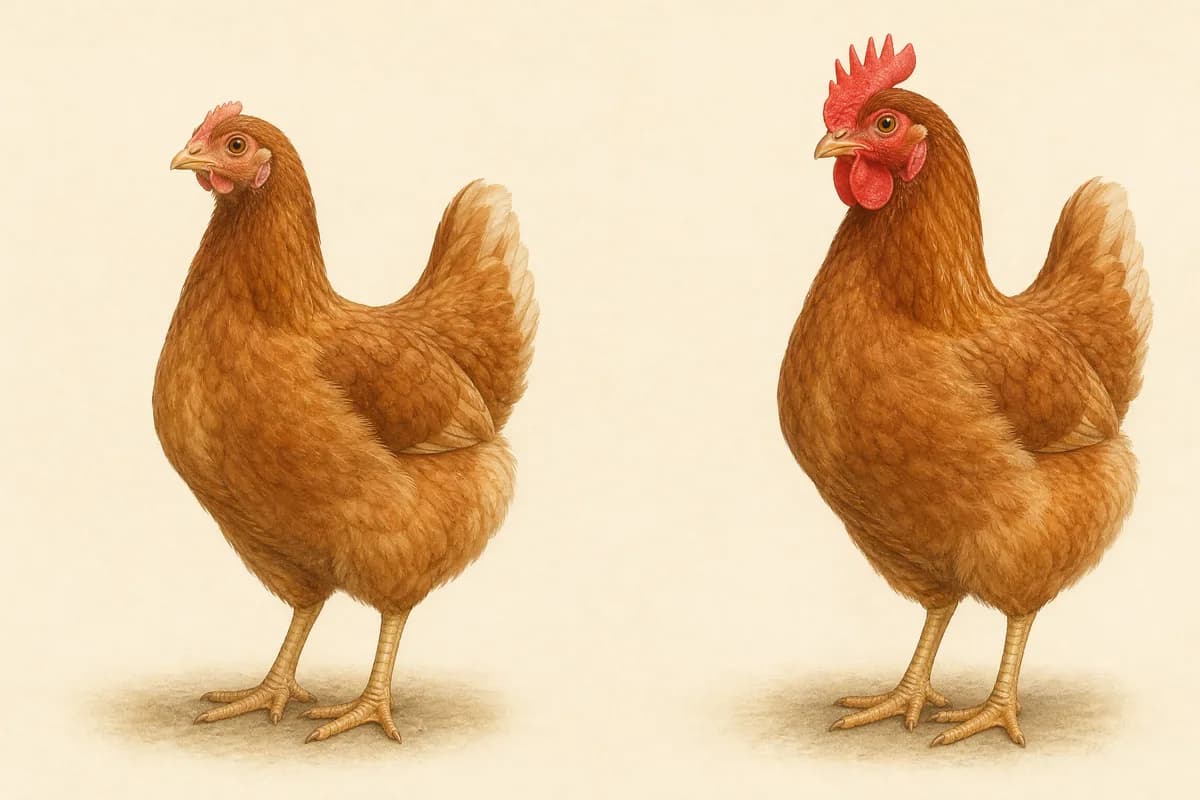
- Comb and wattles grow and turn red. Laying hens have "large, bright red combs and wattles," according to poultry specialists at extension.org. Penn State adds that comb and wattle size and color "can illustrate maturity, but will also differ between breeds," so compare a pullet with herself over time, not with a different breed.
- The pelvic bones spread. Penn State says that as a pullet nears lay, "the pelvic bones will start to widen or separate."
- She starts checking out the nest boxes. Extension.org describes how, before laying, a hen "shows restlessness and begins to look for a nest, poking her head into the nest boxes provided."
Getting ready for the first egg
Put the nest boxes in early
Extension.org says "it is important for pullets to have access to nesting boxes before they start to lay," and Utah State lists introducing nest boxes in the 16-to-20-week stage.
How many? Most sources agree on about one nest box for every four hens:
- Penn State: "at least one 12-inch-by-12-inch nest for every four hens."
- Utah State: "one nest box is required for each four to five hens," about 12 to 15 inches high and wide and at least 12 inches deep.
- Texas A&M: "one nest per four layers," with nests "24 inches above the litter."
Switch to layer feed at the right time
Layer feed is high in calcium, which young birds don't need. Extension.org warns that "growing chickens require only 1.2% calcium" and that too much can cause kidney damage. Texas A&M is blunt: "Do not feed a layer feed to pullets less than 16 weeks of age."
When exactly to switch is where sources differ:
- At the first egg. Texas A&M keeps pullets on a "16 percent protein pullet developer until the first egg is laid," then moves them to a "16 to 18 percent protein laying ration containing 3.5 percent calcium." Extension.org also says to switch "once your chickens start laying eggs (around 20 weeks of age)."
- A little before. Utah State starts layer feed in the pre-lay stage at 16 to 20 weeks, and Penn State says to feed a layer ration "for laying hens over 18 weeks of age."
A simple approach: keep grower feed until about 18 weeks or the first egg, whichever comes first, and never switch before 16 weeks. Once they're laying, extension.org notes that oyster shell "is an excellent calcium supplement for a laying flock," offered in a separate feeder.
What first eggs look like
First eggs are often a little odd. That's normal while a young hen's system gets going:
- Small eggs. Ohio State notes that "as the hen ages, the egg size will increase."
- Double yolks are "most frequently seen in young pullets whose reproductive systems are still developing," says Utah State.
- Shell-less or soft eggs "can result from sudden stress in the laying hen, very young layers, or calcium imbalance," according to Utah State, and extension.org says "the occasional shell-less egg is not necessarily an indication of health problems."
- Flat-sided or misshapen eggs "often occur in young pullets under stress conditions," Utah State adds.
If odd eggs continue for weeks, or come with a sick-looking hen, read our guide to why chickens stop laying and check for illness.
What if they're late?
Before you worry, check the basics:
- Age. Count from the hatch date. Some pullets need 22 weeks or more, and Utah State's range goes to 7 months.
- Season. Since increasing day length is what stimulates pullets to lay (Texas A&M), pullets that reach laying age as the days shorten in fall may start later.
- Feed. Complete grower or layer feed, not mostly treats or scratch.
- Hidden eggs. Free-range pullets may be laying somewhere you haven't found.
Older hens in the flock might be molting at the same time. See our chicken molting guide.
Track the big day
When the first egg arrives, log it in the Egg Log. Over the next weeks you'll watch your new layers ramp up toward their peak at about 35 weeks.
Sources
- Oregon State University Extension, publication PNW 565
- Mississippi State University Extension P3624
- UF/IFAS PS029: Factors Affecting Egg Production in Backyard Chicken Flocks
- Texas A&M AgriLife Extension PSS-250: The Small Laying Flock
- Utah State University Extension: Managing Chickens From Chicks to Peak Egg Production
- Utah State University Extension: A Farmer's Guide to Egg Quality, Safety and Flock Health
- Penn State Extension: Preparing Pullets for the Transition to Lay
- Penn State Extension: Management Requirements for Laying Flocks
- University of New Hampshire Extension: Producing Your Own Eggs
- Poultry Extension: Raising Chickens for Egg Production
- Poultry Extension: Normal Behaviors of Chickens
- Poultry Extension: Feeding Chickens for Egg Production
- Poultry Extension: Avian Reproductive System, Female
- University of Georgia Poultry Science: Frequently Asked Questions About the Egg
- Ohio State University: Chicken Breed Selection