Why Did My Chickens Stop Laying? 7 Causes to Check
Updated October 26, 2026 · Fact-checked against university extension sources (how we check)
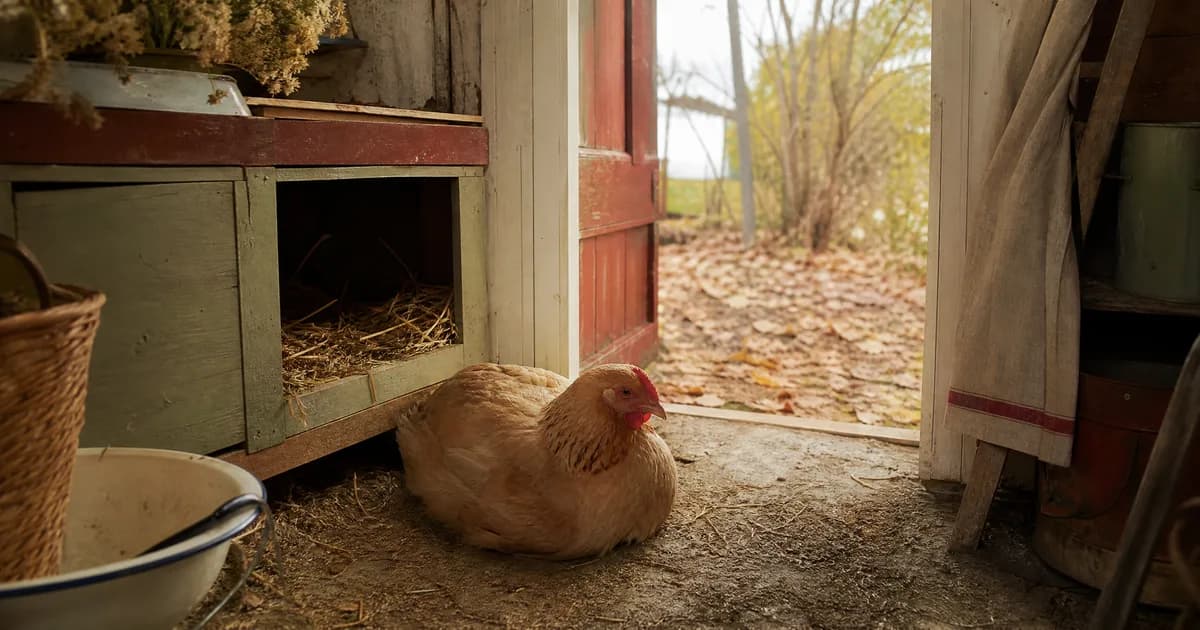
The egg basket is suddenly light, and it's not your imagination. Late fall is when most backyard flocks slow down or stop laying. The good news: it's usually something ordinary and temporary. Oregon State University Extension calls a drop in egg production "the first sign of trouble," so it's worth a quick look at each likely cause.
Work through the checks below in order. The first two explain most fall slowdowns.
The quick check
- Days are short. Is it September through winter, and are the hens otherwise healthy?
- They're molting. Are there feathers all over the coop floor, or patchy-looking hens?
- Age. Are the hens younger than about 18 weeks, or older than 2 to 3 years?
- Stress. Anything new: moving, new birds, a predator, rough handling, heat?
- Feed and water. Complete layer feed? Lots of treats? Any day without water?
- Missing eggs. A broody hen, a hidden nest or egg eating?
- Illness or parasites. Low energy, poor appetite, odd eggs, mites?
Log your eggs every day in our free Egg Log. A slow slide over weeks points to the season; a sudden drop points to something that changed.
1. Shorter days
Light is the biggest driver of laying. Penn State Extension says production falls "most often in September and October when the photoperiod reaches and dips below 12 hours per day." Oregon State says "a 14- to 16-hour day is typical" for laying hens.

How to check: the drop came on gradually as the days got shorter, and the hens look and act normal.
What to do: nothing, if you're happy to wait for spring. Penn State says "it does not harm the birds to allow them to molt naturally." If you want winter eggs, you can add light. Penn State's advice:
- add it slowly, "no more than 1 hour difference each week";
- add it "in the early morning and then let the natural sunset tell the birds when to come back to the coop";
- use warm light bulbs "(not heat lamps!)," keep to "bulbs up to 30-40 watts," and "be aware of fire risks."
Penn State also advises against more than 16 hours of light a day for adult birds. Oregon State warns that once you start a lighting program, "even a 1-day lapse can have a negative impact."
2. Molting
Most hens molt in the fall, replacing their feathers. Oregon State explains that "the hen puts the bulk of her energy into feather growth, leaving little for egg production."
How to check: feathers piling up in the coop, bare or patchy necks and backs, new spiky feathers coming in.
What to do: be patient. Penn State says birds take "about 10-12 weeks to complete a molt and come back into production." Our chicken molting guide covers how long it lasts and how to help your hens through it.
3. Age
Very young and older hens lay less.
- Too young: Mississippi State Extension says pullets usually start laying between 18 and 22 weeks of age, and University of Florida IFAS notes the timing depends "on the breed and season." See when do chickens start laying.
- Getting older: Oregon State says "chickens produce well until they are 2 to 3 years old, and then egg production declines." Penn State notes hens lay fewer eggs with each additional laying cycle.
How to check: know your hens' hatch dates. Older hens still lay, just less, so a flock of older girls will show a lower baseline in your log.
4. Stress
Oregon State lists "moving, handling, overheating, fright, and lack of food or water" as stresses that slow laying.
How to check: think back over the last week or two. Did you add new birds, move the coop, have a predator visit at night, a heat wave or a loud event nearby?
What to do: remove the cause where you can, keep routines steady and lock the coop securely at night. Laying usually recovers once the stress passes. In hot weather, Texas A&M AgriLife warns that "heat stress can reduce the quantity and quality of eggs," so shade and cool water matter.
5. Feed and water
Hens need a complete layer feed. University of New Hampshire Extension recommends a ration of "about 16-18% crude protein and 4% calcium." Oregon State says not to "feed starter or grower diets to layers."
Treats add up fast. Oregon State suggests keeping scratch to "about 10 to 15 percent of their total daily food consumption," and Penn State warns that "feeding table scraps or whole grains can decrease production, make the birds fat, and cause prolapse."
Water matters even more. New Hampshire: "One day without water for any reason will result in less egg production the next few days as eggs are 75% water."
How to check:
- Is the feed bag labeled as a layer feed, and is it fresh?
- Are treats and scratch a small extra, not a main meal?
- Did a waterer run dry or freeze in the last few days?
6. Broody hens and missing eggs
Sometimes eggs are being laid, just not collected.
- A broody hen sits on the nest and stops laying. Oregon State calls Cochins and Silkies "champions at going broody," while broodiness is "rare in Leghorns."
- Hidden nests. New Hampshire notes that free-ranging hens "may lay eggs under buildings or out in the bushes."
- Egg eating. New Hampshire says it happens "especially if the birds are stressed by boredom, crowding, excessive heat and too-bright light."
How to check: watch where the hens go mid-morning, look for shell bits or yolk in the nest boxes, and check whether one hen refuses to leave the nest. Penn State recommends collecting eggs "two times daily," which helps "prevent egg breakage, broodiness, and the potential of egg eating."
7. Illness and parasites
USDA APHIS lists "decreased egg production" and "soft-shelled or misshapen eggs" among the warning signs of illness, along with lack of energy, lack of appetite and sudden death. New Hampshire says mites "can result in lower egg production or death if not controlled" and suggests checking once a month.
How to check: look for a hen who is hunched, quiet or not eating, runny noses, swelling, diarrhea, and mites around the vent. If a drop comes with any of those signs, call your veterinarian or USDA's hotline at 1-866-536-7593.
Track it to spot the pattern
The cause is easiest to see over time. Log your eggs daily in the Egg Log, add notes when something changes, and watch the 7-day average. For the routine care that heads off most problems, grab our free Coop Chore Checklist.
Sources
- Oregon State University Extension, publication PNW 565
- Oregon State University Extension PNW 477: How to Feed Your Laying Hens
- Penn State Extension: Artificial Lighting for Winter Egg Production
- Penn State Extension: Management Requirements for Laying Flocks
- University of New Hampshire Extension: Producing Your Own Eggs
- Mississippi State University Extension P3624
- UF/IFAS PS029: Factors Affecting Egg Production in Backyard Chicken Flocks
- Texas A&M AgriLife: Backyard poultry producers should be wary of high temperatures
- USDA APHIS Defend the Flock: How to Spot Sickness