Incubator Lockdown: What It Is and What to Do
Updated October 24, 2026 · Fact-checked against university extension sources (how we check)
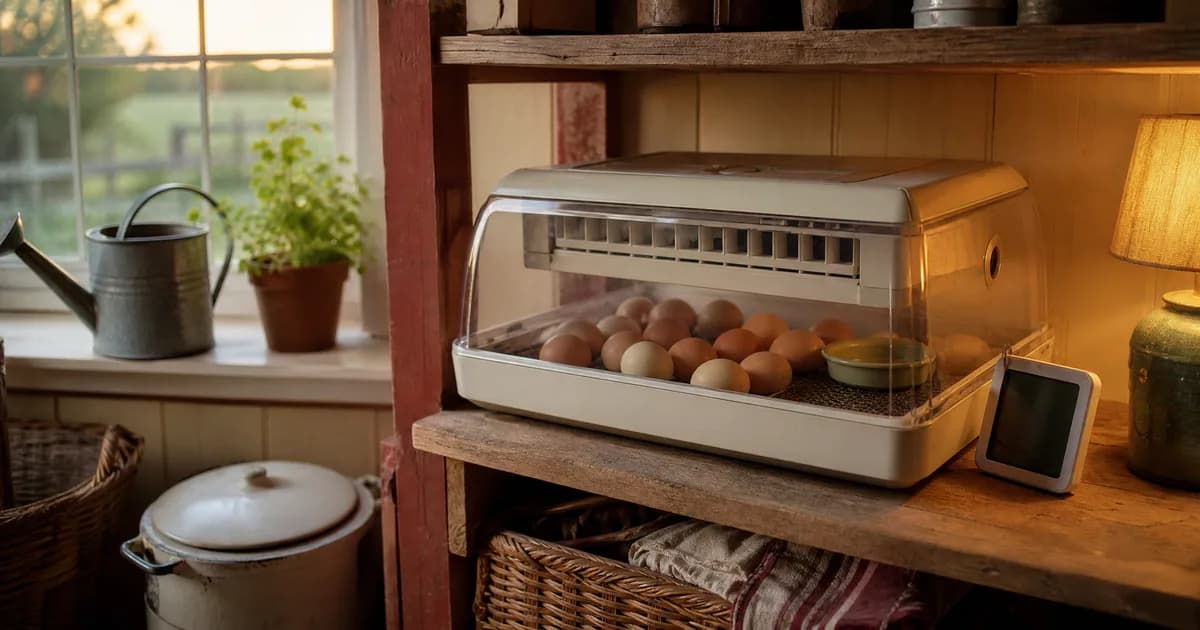
Lockdown is the home stretch of incubation: the last three days before hatch, when you stop fussing with the eggs and let the chicks get ready to break out. It's the easiest part of incubating in terms of work, and the hardest in terms of patience.
Want the exact date for your eggs? Our egg hatching calculator gives you lockdown day, hatch day and a calendar file with reminders.
What lockdown means
Three things change on lockdown day:
- You stop turning. Utah State University Extension: "Three days before the expected hatch, stop turning the eggs." Texas A&M AgriLife Extension says not to turn "during the last 3 days to 4 days."
- You raise the humidity. Mississippi State University Extension says that when hatching, "the humidity is increased to 65 percent relative humidity or more."
- You keep the lid closed. Mississippi State: "Keep the incubator closed during hatching to maintain proper temperature and humidity."
When lockdown starts for each bird
Count the day you set the eggs as day 0. These days come from Mississippi State's incubation table, cross-checked with Texas A&M:
| Bird | Days to hatch | Stop turning (lockdown) |
|---|---|---|
| Chicken | 21 | Day 18 |
| Coturnix quail | 17 | Day 15 |
| Duck (most breeds) | 28 | Day 25 |
| Turkey | 28 | Day 25 |
| Guinea fowl | 28 | Day 25 |
| Goose | 28–34 | Day 25–27 |
| Muscovy duck | 35–37 | Day 31 |
Goose timing varies by breed. Mississippi State says to stop turning on day 25, while Texas A&M uses day 27 for a 30-day goose hatch. Our calculator uses day 27, three days before a day-30 due date.
How to set up for lockdown
On lockdown day:
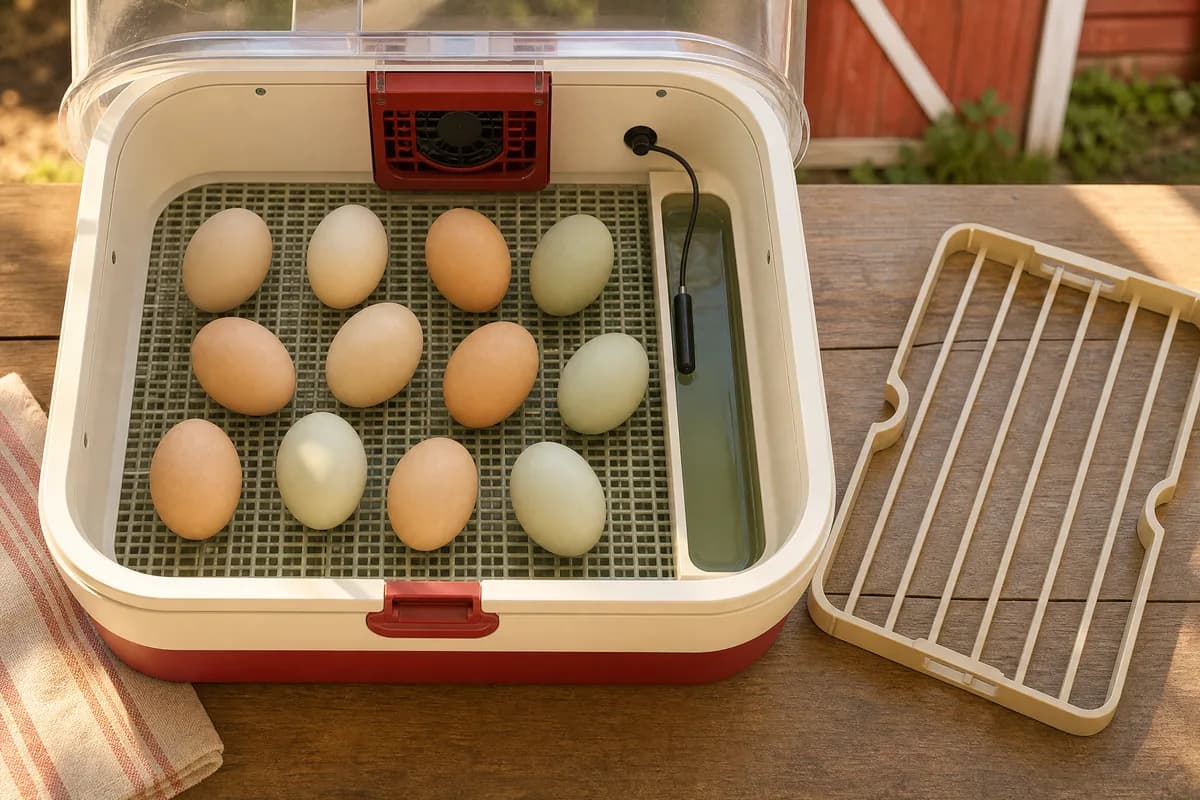
- Do a final quick check if you want one. Remove any eggs that clearly stopped developing (see our candling guide).
- Take the eggs out of the turner, or switch the automatic turner off, and lay them on the incubator floor.
- Top up the water to raise the humidity. Fill whatever reservoir your incubator uses, and check your hygrometer an hour later.
- Open the vents a little more if your incubator has adjustable vents. Mississippi State's table lists a day to "open vents more": day 18 for chickens, and lockdown day or the day before for other birds.
- Close the lid and leave it.
Humidity targets
For chicken eggs, Texas A&M's hatching tips say to raise humidity to "65 to 70 percent" three days before hatch, and University of Minnesota Extension says about 65 percent. Mississippi State gives "65 percent relative humidity or more" for all the birds in its table. If you use a wet-bulb thermometer, Mississippi State lists 90°F and Texas A&M's hatcher figures run 90 to 94°F.
Why the extra moisture? Utah State explains that more humidity "keeps the egg membrane pliable when the chick is hatching." Texas A&M warns that with low humidity, "the membranes will be too tough to break."
Temperature
Keep the incubator steady. Mississippi State keeps the temperature the same through hatch (100°F in a forced-air incubator for chickens). Texas A&M's hatcher figure is a little lower: 98.5°F for chickens, ducks, geese, guinea fowl and turkeys. Either way, small, steady numbers beat big swings.
Why you shouldn't open the lid
Every source we checked agrees:
- Utah State: "it is tempting to peek, but the incubator should remain closed until the hatch date."
- Texas A&M's tip sheet: don't remove the lid after day 18, and "if you must remove it to check the water level on day 20, do so quickly."
- University of Minnesota: "Do not open the incubator unless necessary during the last 3 days of incubation."
Opening the lid dumps the warm, humid air you just built up. A chick that has already broken into the shell can then end up stuck in drying membranes, the problem keepers call "shrink-wrapping."
What happens during lockdown
You may hear peeping before you see anything. Virginia Tech's embryology tip sheet says "you may begin to hear the chicks peep on day 20" and that chicks "should start to 'pip' out on day 21." Texas A&M says chicks "should start to pip within a day of the incubation period listed for the species."
Once a chick pips, it still has hours of work ahead. Texas A&M says "the entire hatching process requires 10 hours to 20 hours," and its tip sheet notes chicks "may take nearly 24 hours to hatch." That's normal.
Should you help a chick hatch?
No. Texas A&M: "Do not help chicks out of their shells. If they cannot hatch themselves, they likely will not survive." Virginia Tech and Utah State give the same advice. Hard as it is, hands off is kindest.
After the hatch
Leave chicks in the incubator until they're dry and fluffy. Virginia Tech says that usually takes 2 to 6 hours. Texas A&M's hatching tips say to leave them "24 hours or until completely dry," and its longer publication warns that "excessive time in the incubator can dehydrate chicks." Then move them to a warm brooder.
If day 21 comes and goes with nothing happening, don't toss the eggs yet. Our guide to eggs not hatching on day 21 walks you through what to check.
Sources
- Mississippi State University Extension: Important Incubation Factors
- Texas A&M AgriLife Extension B-6092: Incubating and Hatching Eggs
- Texas A&M AgriLife Extension EPS-003: Tips for a Successful Hatch
- Utah State University Extension: Hatching and Caring for Chicks
- University of Minnesota Extension: Hatching and Brooding Small Numbers of Chicks
- Virginia Cooperative Extension: Embryology Tip Sheet