Winter Coop Ventilation: Fresh Air Without Drafts
Updated October 26, 2026 · Fact-checked against university extension sources (how we check)
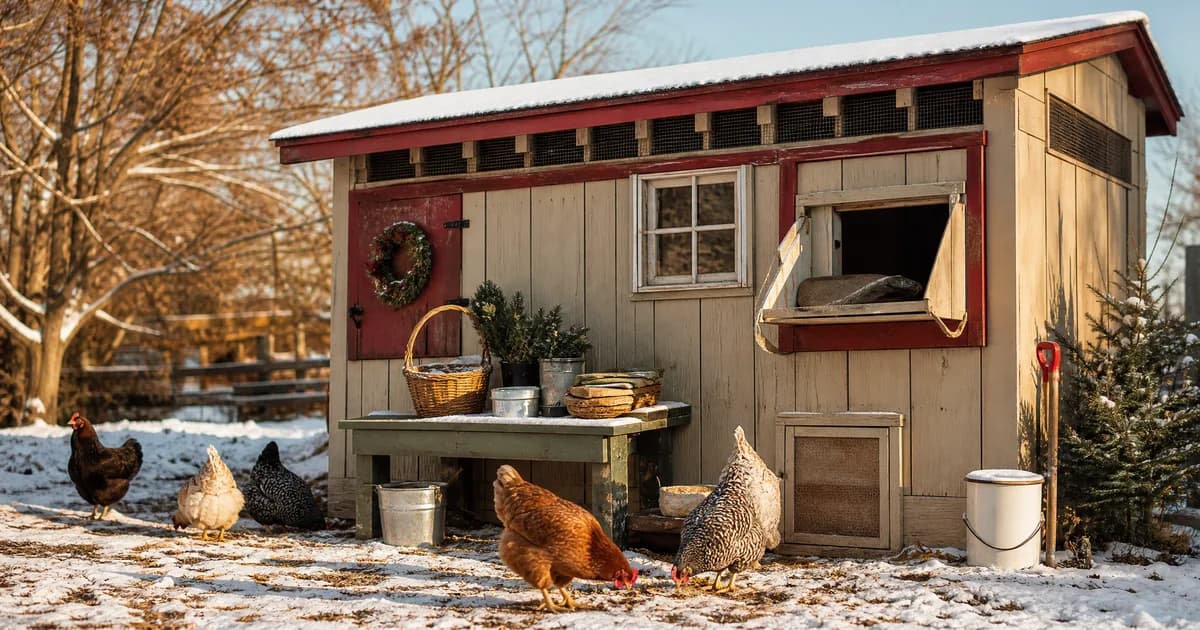
It seems backwards: in the coldest months, your coop needs fresh air. But a closed-up coop fills with moisture and ammonia, and damp air makes cold hens colder and frostbite more likely. The goal is air that moves above the birds, not across them.
Why ventilation matters in winter
Chickens put out a surprising amount of moisture. Poultry Extension says they "generate a great deal of moisture from their breathing, feces, and water spillage." Oregon State Extension explains that "ventilation removes ammonia fumes, carbon dioxide and moisture from coops and brings in fresh air."
Trapped moisture causes several problems:
- Ammonia. Maryland Extension says "moisture can lead to increased levels of ammonia, as well as make it more difficult for the birds to stay warm."
- Breathing problems. Illinois Extension warns that "humid, ammonia laden air in the coop will result in the flock having respiratory and health issues," and UConn adds the risk of mold and bacterial growth.
- Frostbite. Poultry Extension says frostbite "is more likely to occur during the nighttime hours in a cold, poorly ventilated coop with damp bedding."
As Maryland puts it, "ventilation is not only about adding fresh air but removing stale air."
Ventilation vs. drafts
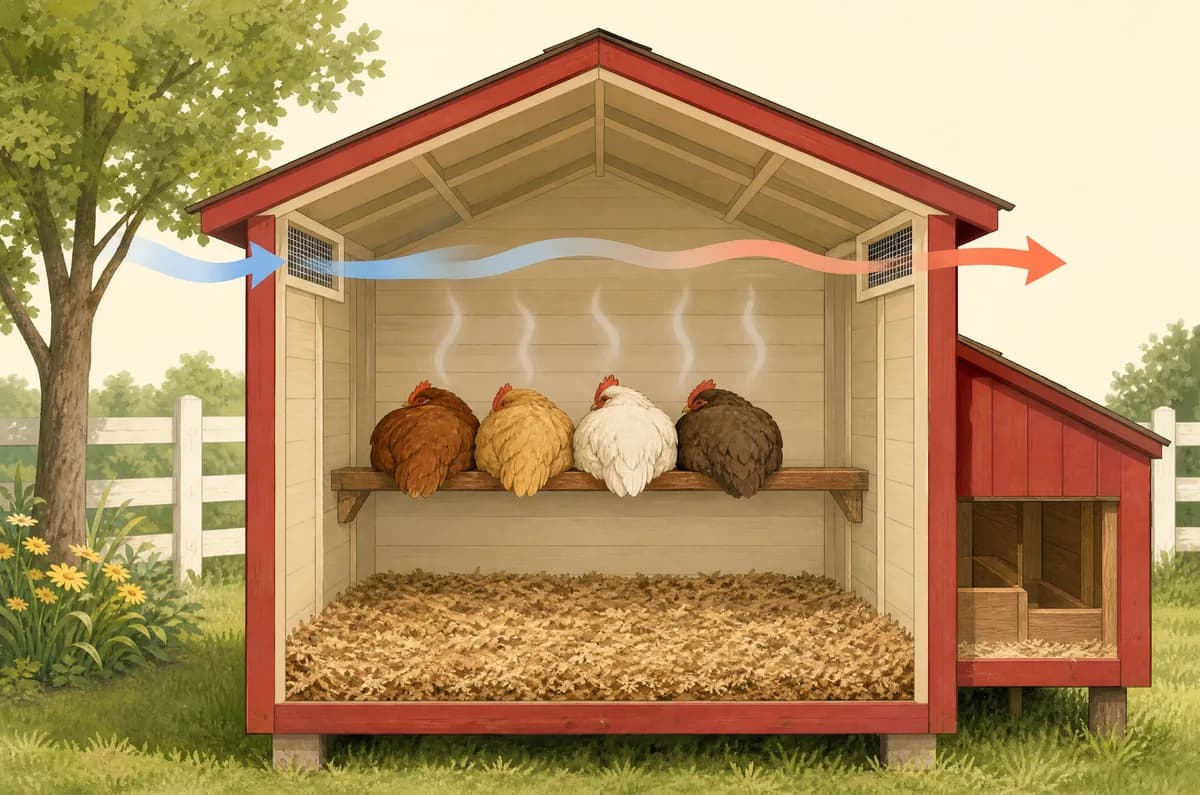
You want air exchange, not wind on your birds. Oregon State says "a well-designed chicken coop has adequate air exchange without creating drafts," and Penn State agrees: "Ample air movement without a draft is essential."
Illinois gives an easy test: "You should never see air moving the chicken's feathers in the coop during the winter." UNH explains why it matters: "A cold wind entering the coop takes away the birds' natural ability to keep themselves warm."
Where to put the vents
- High up. Maryland says to "be sure there is a vent or opening near the roof or ceiling of the coop." Oregon State lists "windows in walls or vents in gables, eaves or roofs," and Illinois describes "a roof or eave vent and a partially open window."
- Not over the roost. Penn State: "do not allow the vents or windows to open directly over the birds perching area."
- Away from the wind. Penn State and UNH both say to put openings on the side away from prevailing winds. Penn State adds "the south or east side is usually best." Poultry Extension suggests a windbreak on the windy side.
- Angle inlets up. Penn State suggests angling air inlets upward "to help the air to mix with the warmest (dryer) air as it enters the coop."
For most backyard coops, this is simple. Penn State says "for small coops windows or vents on one side of the house usually provide plenty of ventilation," and Oregon State says "passive ventilation is adequate for most backyard chickens coops." UNH suggests "some vent holes or a small window covered with burlap." If you use a fan, Oregon State says to make sure it doesn't "blow air directly on the birds."
How big should vents be?
We couldn't find an extension source that gives a vent-size rule for backyard coops, so we won't give you a made-up number. Instead, watch for the signs below and add or close openings until the coop stays dry. Penn State also notes that "allowing adequate space per bird also helps keep the humidity level in the coop to a minimum." Our free Coop Size Calculator checks whether your coop has enough room for your flock.
Signs your coop needs more air
- Condensation. Poultry Extension: "If there is condensation on windows or uninsulated walls of the coop in the morning, ventilation must be increased." Penn State notes moisture on walls and ceiling is a sign of poor insulation or ventilation.
- Damp litter or ammonia. Penn State says "dampness and ammonia build-up is a sign that there is not enough ventilation for the number of birds in the coop."
- The smell. The University of Maine says bad air "will smell of ammonia and possibly sting your eyes."
Don't rely on your nose alone. Penn State says "poultry health guidelines suggest that ammonia be kept below 25 ppm," but "our human nose will not recognize ammonia until about 20 to 30 parts per million," and people who are around it often lose the ability to smell it. If you can smell ammonia, the level is probably already too high.
Keep the litter dry
Dry litter and good ventilation work together. Penn State notes that even a small rise in litter moisture can sharply increase ammonia release.
- Depth. Sources vary from 3 to 4 inches (Penn State, Maryland) to 6 to 12 inches (Illinois) for winter.
- Stir it. NC State says to "stir the litter often to keep it dry and to prevent caking."
- Fix wet spots. UNH: "Very wet litter near the water or feed should be replaced." Illinois says to "check daily for water spills and leaks."
- Top it up. Poultry Extension says to "top dress the bedding as needed throughout winter to keep it dry."
- Deep litter. UConn explains that with deep litter, "additional layers of bedding are added, allowing the litter to build up over time," and that keeping it at the right moisture "reduces ammonia production." Maryland notes deep litter "generates heat as it is broken down by microbial action."
A leaky waterer is a common source of wet litter. See how to keep chicken water from freezing for winter watering without the mess.
Should you insulate?
Sources differ. Oregon State says "coops do not need to be insulated, but be sure there are no drafts," and Maryland says insulation "is not necessary" but "will help keep the heat generated by the birds in the coop." Penn State says "well-ventilated houses must also have plenty of insulation and a good vapor barrier." If you insulate, keep the vents open.
And skip the heater: see do chickens need heat in winter? for why most flocks are better off without one.
Sources
- Poultry Extension: Frostbite in Chickens
- Poultry Extension: Small-Scale Poultry Housing
- Penn State Extension: Small Scale Poultry Housing
- Penn State Extension: Detecting Ammonia in Poultry Housing
- Penn State Extension: Management Requirements for Laying Flocks
- Oregon State University Extension EC 1644: Backyard Chicken Coop Design
- University of Maryland Extension FS-1133: Winter Weather and Small Flocks
- University of Illinois Extension: How to Care for Backyard Chickens in Winter
- University of New Hampshire Extension: How Should I Take Care of Backyard Chickens in the Winter?
- University of New Hampshire Extension: Producing Your Own Eggs
- UConn Extension: Backyard Poultry, A Quick Look at Raising Healthy Birds
- University of Maine 4-H: Housing Your Pullets
- NC State Extension: Keeping Garden Chickens in North Carolina