Do Chickens Need Heat in Winter? What Extension Experts Say
Updated October 26, 2026 · Fact-checked against university extension sources (how we check)
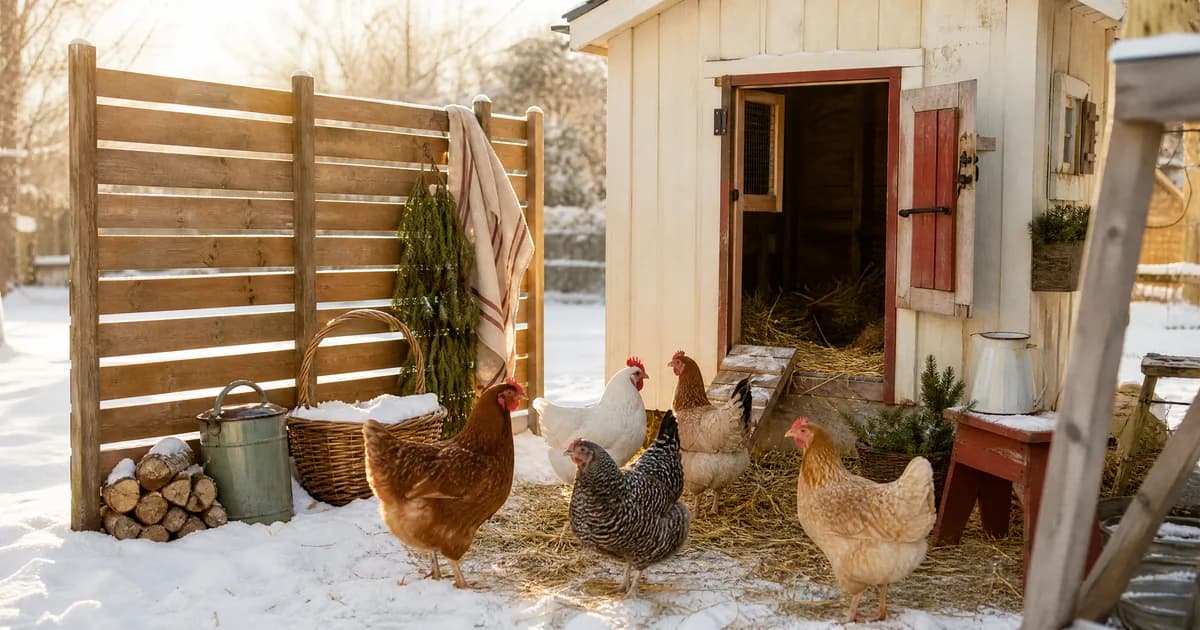
When the first hard freeze hits, it's natural to wonder whether your hens need a heater. For most backyard flocks, extension specialists say no. What chickens need in winter is a dry, draft-free, well-ventilated coop. Heat can even do harm: heat lamps start coop fires every winter.
Do healthy adult chickens need heat?
Usually not. Ohio State University Extension says "cold tolerant chicken breeds acclimated to the weather living in an insulated, dry coop with adequate ventilation do not usually need supplemental heat." University of Maryland Extension agrees: "As long as adult birds are protected from the wind and wet weather, they should not need any additional heat even during the coldest time of year."
The real enemies are wind and moisture, not cold itself. Ohio State notes that "most chicken breeds can tolerate cold, even sub-freezing temperatures," but "complications can arise when wind and moisture are accompanied with cold temperatures." Poultry Extension adds that "flocks can do well at sub-zero temperatures if you use a deep litter system."
Ohio State also suggests "allowing them to acclimate to the cold naturally as winter approaches," which "builds up their natural tolerance to cold."
Where sources differ
Not every source draws the line in the same place:
- Small flocks. UW–Madison Extension says "a large number of chickens will produce enough body heat collectively," but "a smaller flock is not able to do this, and many people will want to provide some source of heat."
- Near zero. Ohio State's Wayne County office says "the closer temperatures get to zero, you may need to consider supplemental heat."
- Molting hens and bantams. Maryland notes molting hens "may need some extra heat (and or protection) until their feathers grow back in," and that bantams may need heat when large breeds are comfortable.
Watch your birds. Ohio State's Wayne County office says if birds are "evenly spaced within the coop," they're comfortable, but "if they are all within a tight group," they're too cold.
The trouble with heat lamps
Every source that covers heat mentions fire. Poultry Extension says "heat lamps are a potential fire hazard," and Maryland warns that "even heating lamps can cause fires if not properly secured." UW–Madison explains why coops are risky: "Chicken houses are dusty, and chickens may knock things over, especially if disturbed." NDSU Extension says that with a heat lamp, "a barn fire could easily occur in a matter of minutes."
Our guide to winter coop ventilation covers the airflow that keeps hens warm and dry without any heat.
If you do use heat
Extension safety guidance for heat lamps:
- Hang it like it's permanent. NDSU: "Secure all heat lamps with a non-flammable hanger… Do not use twine or rope."
- Use a guard. Ohio State's ag safety program says to use lamps "enclosed with a heat lamp guard" and to avoid bulbs over 250 watts.
- No extension cords. NDSU: plug the lamp "directly… into an outlet, not an extension cord," with GFCI and AFCI protection.
- Keep it clean and clear. NDSU says to clean off "dust, cobwebs and dead insects," and the NFPA barn checklist (as summarized by South Dakota State) says heaters should be "a safe distance away from any flammable source."
- Don't leave it unattended. Ohio State's ag safety program: "never leave a heat lamp unattended overnight."
Maryland also warns that "gas heaters like propane and kerosene can be a fire hazard," and suggests radiant heaters "that have automatic shutoffs" instead.
What chickens need instead of heat
A dry, draft-free, ventilated coop
Illinois Extension says "chickens need a dry, draft-free, and well-ventilated building," and that "you should never see air moving the chicken's feathers in the coop during the winter." But don't seal the coop shut. Ohio State says "do not completely eliminate ventilation, but control the airflow to prevent humidity and ammonia accumulation." University of New Hampshire Extension explains why: "high humidity can chill chickens."
Dry litter
Illinois recommends "a deep, 6 to 12-inch layer of dry bedding," and Maryland says "three-to-four inches of pine shavings or straw bedding provides good insulation." Maryland adds that deep litter "generates heat as it is broken down by microbial action." UNH says to "stir the litter frequently during the winter to keep it as loose and dry as possible."
Roosts that cover their feet
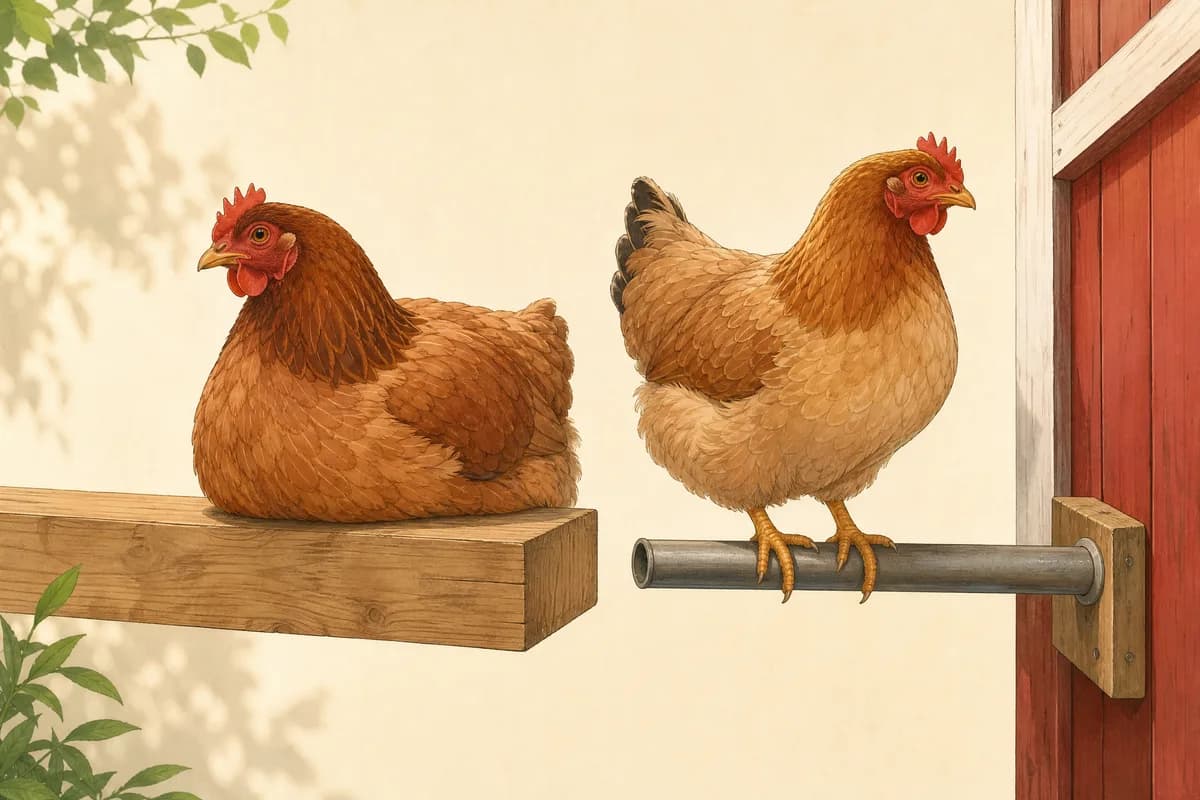
Maryland recommends perches with "a flat surface (like a 2x4) that will allow the birds to cover their feet with their feathers," and wood rather than metal or plastic pipe, which "will conduct the cold to the feet."
Out of the wind
Maryland says to "look for and fix any cracks or holes that will allow wind to blow into the building." Ohio State suggests a heavy tarp as a "temporary wall to prevent wind and moisture at the ground level of the coop."
Feed and water
Maryland says birds "require extra energy during cold weather months so feed needs to be available at all times." Several extension sources suggest a little scratch grain late in the day; Ohio State says it helps "chickens to stay warm throughout the night." UW–Madison cautions that too much can cause nutrient imbalances. Keep the water flowing too: see how to keep chicken water from freezing.
Frostbite: who's at risk and what to do
Frostbite happens "when the fluid in tissues freezes," Poultry Extension explains. It's "most common on combs, wattles, and feet" (Ohio State) and "most common in roosters because they typically have larger combs and wattles" (Poultry Extension). Maryland names large-combed breeds like Leghorns. Damp air makes it worse: Ohio State says "humid air creates more frostbite risk than drier air."
Prevention: dry, ventilated air first. Illinois and Maryland say petroleum jelly on large combs and wattles can help, but Poultry Extension notes "coop management is the real key."
Signs: "gray, black, or brittle areas" (Ohio State).
What to do: Ohio State says to bring the bird somewhere warm and warm the area slowly; "do not attempt rapid warming." Poultry Extension says "do not use direct heat, such as a hair dryer or heat lamp," and warns that some pain medicines "are lethal to chickens." Healing "can take four to six weeks." Call your veterinarian if you see signs of infection.
When heat is the right call
Chicks are the exception. Utah State Extension says "baby poultry cannot generate enough heat to sustain themselves," and Maryland agrees that "young birds will need a source of heat to survive and grow." If you're hatching this winter, our Hatch Countdown tracks your dates, and eggs not hatching on day 21 helps if the hatch runs late.
Plan the coop for winter
A coop with enough room stays drier. Our free Coop Size Calculator works out coop and run space, roost length and nest boxes for your breeds.
Sources
- Ohio State University Extension ANR-66: Winter and Your Backyard Chickens
- Ohio State University Extension, Wayne County: Winter and Backyard Birds
- Ohio State University Ag Safety: Using Heat Lamps, Proceed with Caution
- University of Maryland Extension FS-1133: Winter Weather and Small Flocks
- University of Illinois Extension: How to Care for Backyard Chickens in Winter
- UW–Madison Extension: Preparing for Winter
- Poultry Extension: Frostbite in Chickens
- University of New Hampshire Extension: Chickens in Winter (Q&A)
- University of New Hampshire Extension: Producing Your Own Eggs
- Utah State University Extension: Basics for Raising Backyard Chickens
- NDSU Extension: Take Precautions When Using Heat Lamps
- South Dakota State University Extension: Electrical Safety in the Barn