The Best Chicken Breeds for Beginners (Extension Picks)
Updated October 26, 2026 · Fact-checked against university extension sources (how we check)
Your first chickens should make you fall in love with keeping chickens, not make you regret it. That means calm birds you can handle, that cope with your weather and lay well. Here's what university extension specialists recommend, and why.
Want to compare them side by side? Our free Breed Directory has a Recommended for beginners filter, and every fact there comes from the same sources.
What makes a breed good for beginners?
Look for three things:
- A calm temperament. Birds that tolerate handling are easier to check, catch and enjoy. Mississippi State Extension sorts breeds into temperament groups, from friendly to nervous (flighty) and aggressive.
- Hardiness. A forgiving bird copes with your climate and the odd mistake. Breeds described as cold-hardy are a safer bet in snowy states.
- Steady laying. Most beginners want eggs. University of New Hampshire Extension lists yearly egg counts for common breeds, from 100–160 for Cochins up to 250–300 for White Leghorns.
The best breeds for beginners
Barred Plymouth Rock
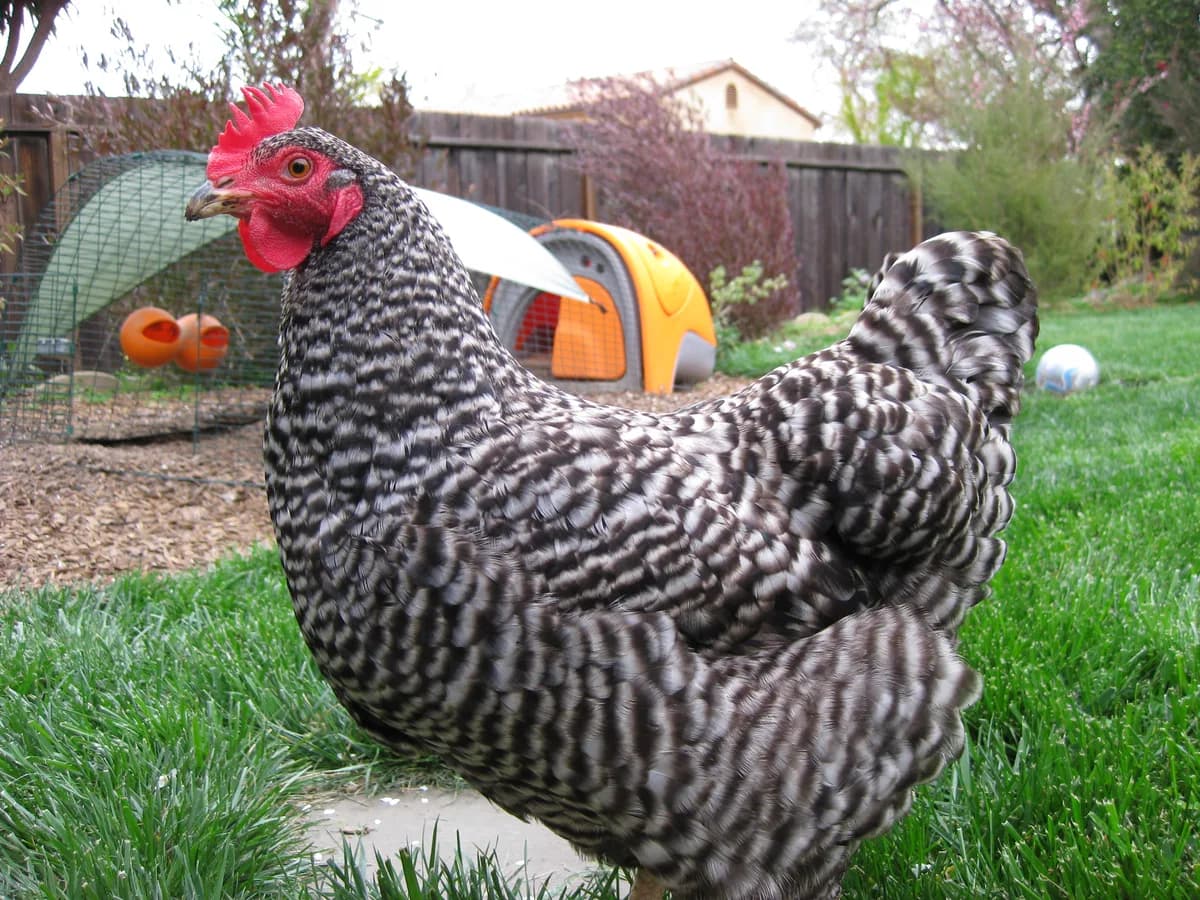
Photo: Thomas Kriese, CC BY 2.0, via Wikimedia Commons, cropped

Ohio State lists Plymouth Rocks among the breeds that "may be good choices for the novice backyard poultry enthusiast." Mississippi State calls them docile, Ohio State says they "do not mind the cold," and University of New Hampshire Extension puts them at 200 to 280 brown eggs a year. Read the Barred Rock profile.
Buff Orpington
Also on Ohio State's novice list. The Livestock Conservancy describes a "calm, friendly disposition," Mississippi State calls them calm and docile, and Ohio State says they lay well in the winter months too. They're big, fluffy and often go broody, which is a bonus if you'd like to hatch chicks someday. Buff Orpington profile.
Wyandotte
The third breed on Ohio State's novice list. Mississippi State calls Wyandottes relatively docile and "quite cold hardy," and Oklahoma State notes their rose combs "do not freeze as easily as single combs." One catch: Mississippi State says they "do not do well in the heat." Wyandotte profile.
Speckled Sussex
The Livestock Conservancy calls the Sussex "a suitable breed for beginners," describing a calm, curious bird that likes people, with 200 to 250 large tan to brown eggs a year. It also notes Sussex hens go broody and make good mothers. Speckled Sussex profile.
Rhode Island Red
Mississippi State describes Rhode Island Reds as docile and friendly, and the Livestock Conservancy praises their hardiness and ability to handle marginal conditions. They lay 250 to 280 brown eggs a year (UNH). The one caution, from the Livestock Conservancy: some roosters can be aggressive, so start with hens. Rhode Island Red profile.
Australorp
The Livestock Conservancy describes Australorps as "friendly (even the roosters)" and "active, yet gentle," and puts them at 250 or more eggs a year. Their black feathers need shade in hot weather. Australorp profile.
Hybrids: easy egg layers
If eggs are the main goal, hybrids are worth a look. They aren't breeds, so they don't come with a breed standard, but they're bred to lay:
- ISA Brown. Utah State Extension describes it as a consistent layer of 300 to 320 eggs a year, "calm, docile" and "great for beginners." The trade-off, also from Utah State: "high egg yield but shorter lifespan." ISA Brown profile.
- Red sex-links. Mississippi State says sex-links "can often produce 300 eggs per year or more." For one named cross, the Golden Comet, Utah State lists 280 to 320 eggs a year and a calm, friendly temperament. Red Sex Link profile.
Breeds to think twice about for a first flock
These aren't bad birds, just less forgiving for a first-timer:
- White Leghorn. Wonderful layers, but Ohio State says Leghorns are "not usually the best choice for the novice backyard poultry enthusiast," and Mississippi State lists them as nervous (flighty). Leghorn profile.
- Polish. Oklahoma State says they are easily frightened and prone to being bullied, and UW–Madison notes their crests can restrict their vision and need care in freezing weather. Polish profile.
- Silkie. Sweet-looking, but University of New Hampshire Extension calls them an ornamental breed because they "tend to produce few eggs," and Oregon State Extension calls Cochins and Silkies "champions at going broody." Silkie profile.
- Jersey Giant and Brahma. Gentle, but very big: Jersey Giant roosters reach 13 lb or more (UW–Madison), and the Livestock Conservancy recommends larger nest boxes, more roost space and lower roosts for them. Jersey Giant · Brahma.
Start with hens, and check local rules
Roosters can be the harder half of a flock: the Livestock Conservancy notes some Rhode Island Red roosters may be aggressive, so many first flocks are hens only. Check your local rules first, too: NC State Extension suggests calling your local animal control or zoning office before you order birds.
Plan the space before the chicks arrive
The most common first-timer mistake is a coop that's too small. NC State Extension says more space means "less stress for the birds," and "less stress means less pecking and fewer health issues." Our free Coop Size Calculator works out the coop, run, roost and nest boxes for the breeds you pick.
Once your pullets are growing, the Laying Calculator estimates when the first eggs will come, and the Egg Log keeps count after that.
A colorful beginner basket
Most beginner favorites lay brown eggs. If you'd like some color in the carton, an Easter Egger adds blue, green or pinkish eggs. See which breeds lay which colors in our guide to chickens that lay colored eggs, or grab the free Egg Color Chart printable.
Sources
- Ohio State University: Chicken Breed Selection
- Mississippi State University Extension P3036: Choosing the Right Breed for Your Backyard Flock
- University of New Hampshire Extension: Producing Your Own Eggs
- University of New Hampshire Extension: 5 Unique Rare Chicken Breeds
- The Livestock Conservancy: Rhode Island Red, Orpington, Australorp and Sussex
- Oklahoma State University: Breeds of Livestock, Wyandotte and Polish
- Utah State University Extension: Managing Chickens From Chicks to Peak Egg Production
- University of Wisconsin–Madison Extension A2880: Chicken Breeds and Varieties
- Oregon State University Extension PNW 565: Why Did My Chickens Stop Laying?
- The Livestock Conservancy: Jersey Giant
- NC State Extension: Keeping Garden Chickens in North Carolina