White Leghorn
The white-egg champion: light, active and productive, but flighty and rarely broody.
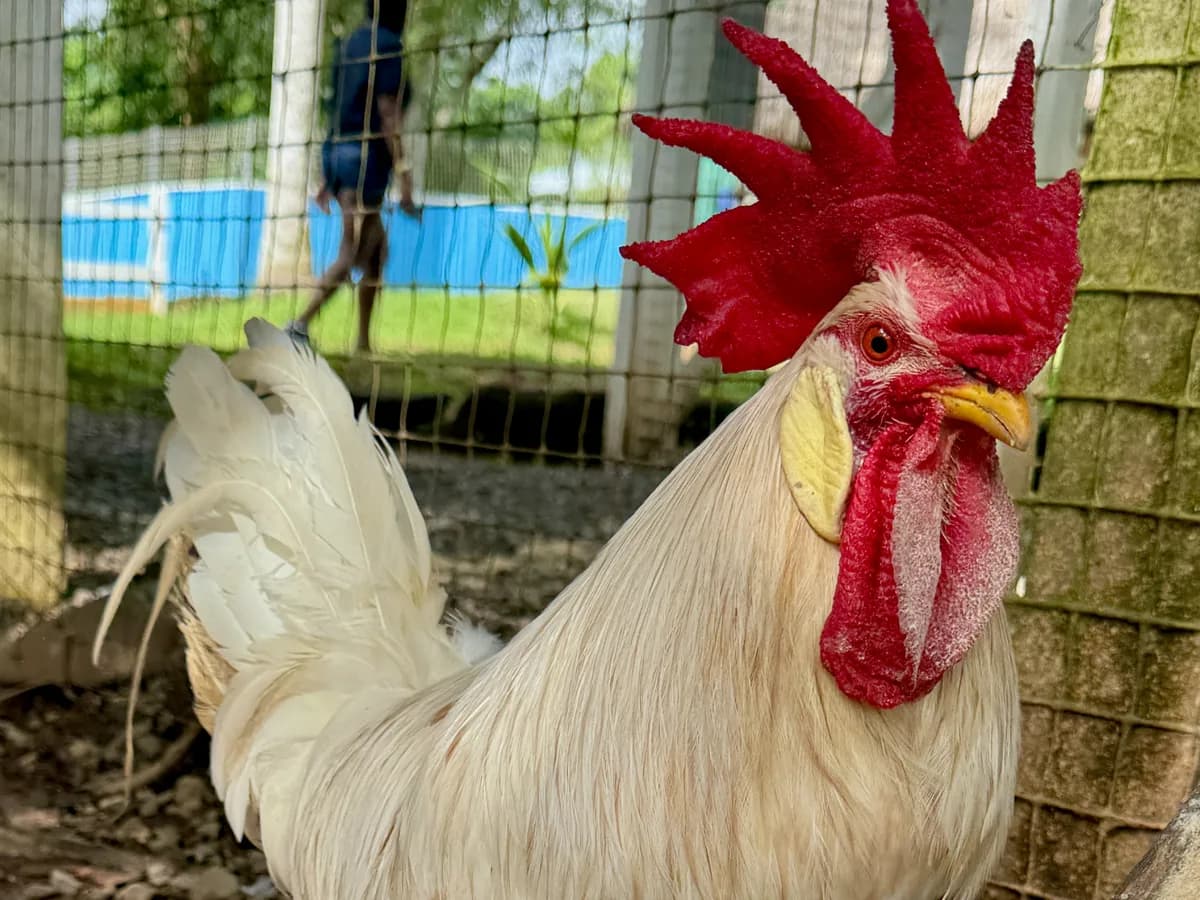
Photo: Oleg Yunakov, CC BY-SA 4.0, via Wikimedia Commons, cropped

White Leghorn at a glance
Lightweight
- Status
- APA breed, Mediterranean class. Single Comb White admitted 1874.[1]
- Eggs per year
- 250–300[6]
- Egg size
- Extra large[5]
- Bantam
- Yes (Single Comb White bantam admitted 1940).[1]
- Good for beginners
- Ohio State says Leghorns are not usually the best choice for novice keepers.[5]
- Cold
- The big single comb can get frostbite; Rutgers suggests small-combed breeds for cold areas.[7]
- Heat
- Mediterranean breeds generally do well in hot, humid areas.[7]
- Varieties
- White, Light and Dark Brown, Buff, Black, Silver, Red, Black-Tailed Red and Columbian, in single and rose comb[1]
- Conservation
- Non-industrial Leghorns are listed as Recovering by the Livestock Conservancy; commercial white strains are not.[8]
- How to spot one
- All-white plumage, large single comb, white earlobes, yellow skin and yellow, clean shanks. UF notes earlobe color often matches shell color.[4]
Facts no source backs up are left out. Updated October 26, 2026 (how we check).
If eggs are the point, the White Leghorn is the breed to beat. It's the classic white-egg layer, light, active and productive, and Poultry Extension calls the White Leghorn "the principal white egg producer." The trade-off is personality: this is not a lap chicken.
From Italy to the world
Mississippi State Extension says Leghorns originated in Tuscany, in central Italy. The Single Comb White Leghorn was admitted to the American Poultry Association's Standard in 1874, in the Mediterranean class. There are many other colors too, from Light and Dark Brown to Buff, Black, Silver, Red, Black-Tailed Red and Columbian, in single- and rose-comb versions (Illinois Extension).
Eggs: the big reason to keep them
University of New Hampshire Extension puts White Leghorns at 250 to 300 eggs a year, and Ohio State rates the eggs extra large. The shells are white. UF/IFAS notes that earlobe color often matches shell color, and Leghorns, with their white earlobes, are the classic example.
Texas A&M says Leghorns begin laying at about 5 months, a little earlier than heavier breeds. Our Laying Calculator uses the lightweight setting for them, and the Egg Log will show just how productive they are.
Temperament: busy and flighty
Mississippi State puts Leghorns in its "nervous (flighty)" group, and Ohio State says they "can be loud, nervous and occasionally aggressive towards people." They're light and quick, and many keepers find them skittish. That's why Ohio State says they're "not usually the best choice for the novice backyard poultry enthusiast."
If you want eggs more than cuddles, that may not bother you at all.
Rarely broody
Leghorns almost never go broody. Illinois Extension says very few show any tendency to broodiness, and Rutgers lists Leghorns among breeds that "don't go broody." That means more eggs, but you'll need an incubator or another breed if you want to hatch chicks.
Climate: better in heat than in deep cold
Rutgers Extension says Mediterranean breeds "generally do well in hot humid areas," so Leghorns are a good pick for the South. The weak spot is the large single comb, which can get frostbite. Rutgers suggests a small-comb variety in cold areas, and the Leghorn does come in rose comb.
Size
Leghorns are small and light: the standard weight is 6 lb for a rooster and 4.5 lb for a hen (UF/IFAS), and Mississippi State says adults usually weigh 4.5 to 5.5 lb. Poultry Extension notes White Leghorns convert feed to eggs efficiently. A bantam version exists.
How to recognize a White Leghorn
All-white feathers, a large single comb, white earlobes, and yellow skin and yellow, unfeathered shanks (UF/IFAS). The Livestock Conservancy lists non-industrial Leghorns as Recovering; commercial white strains aren't part of that listing.
Is a White Leghorn right for you?
Choose Leghorns for the most eggs per bag of feed, especially in a warm climate, and if you're happy with a busy, independent flock. For a friendlier brown-egg layer, see the Rhode Island Red or Australorp.
Mixing white eggs with brown, blue and chocolate ones? Our free Egg Color Chart printable shows them all on one page.