Silkie
The fluffy, fur-feathered bantam with black skin and five toes: a champion broody, not a big layer.
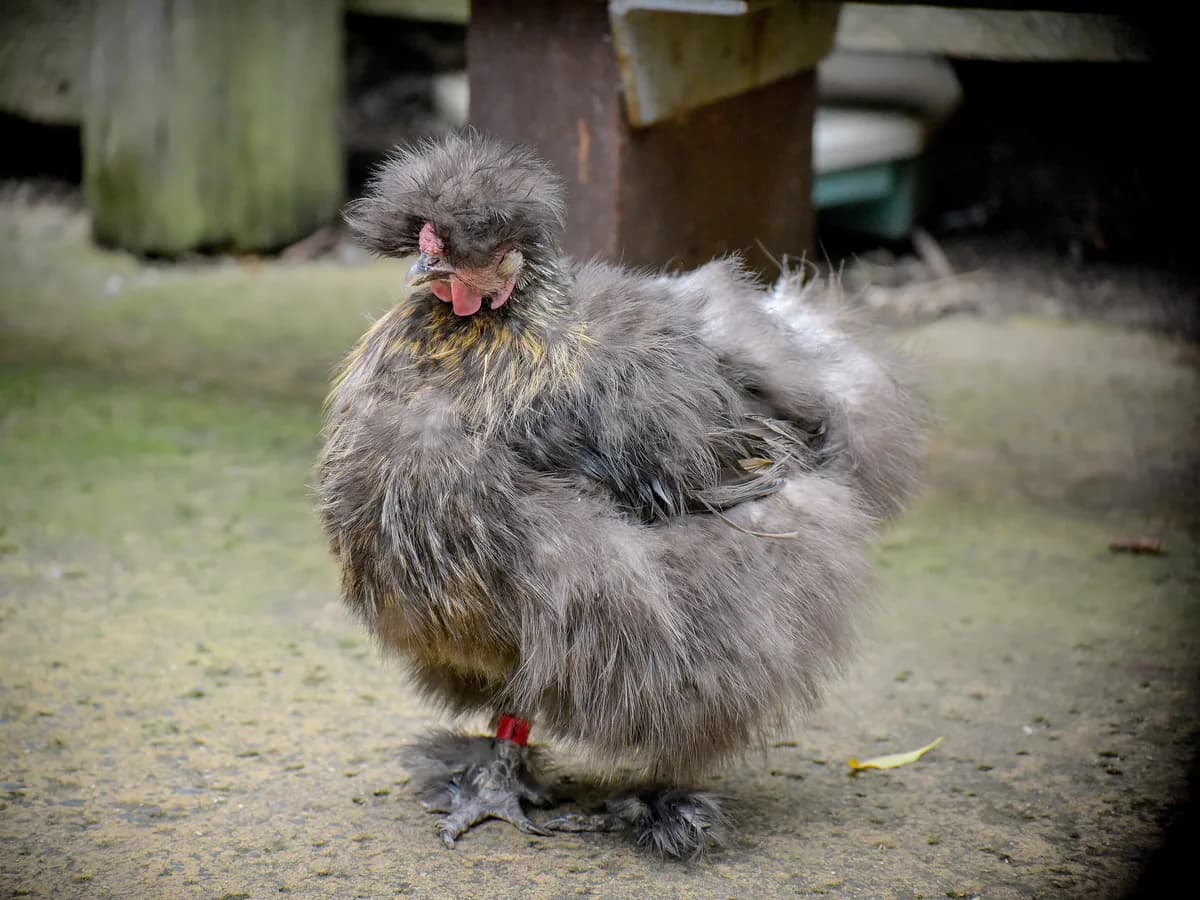
Photo: Rachelle Haun, CC BY 2.0, via Wikimedia Commons, cropped

Silkie at a glance
Bantam (small)
- Status
- APA breed, bantam only in the US (Feather Leg class). In Great Britain it is large fowl.[1][2]
- Origin
- From Asia. Sources disagree on where: Illinois Extension says Japan, others name China or India.[3][4][2]
- Egg color
- Cream or tinted[2]
- Weight
- APA bantam standard: 36 oz (2.25 lb) rooster, 32 oz (2 lb) hen.[2]
- Bantam
- Bantam only in the US.[1]
- Conservation
- Not on the Livestock Conservancy's priority list.[6]
Facts no source backs up are left out. Updated October 26, 2026 (how we check).
No other chicken looks like a Silkie. Its feathers feel like fur, its skin is black, and it has five toes on each foot. Silkies don't lay many eggs, but they're beloved as pets and famous as the broodiest hens around.
Where Silkies come from
Silkies come from Asia, but sources disagree on where. Illinois Extension says the breed is believed to have originated in Japan; University of New Hampshire Extension says China, Japan or India "depending on who you ask"; and Oklahoma State says most believe China or Japan.
In the United States the Silkie is a bantam only: the American Poultry Association lists it in the bantam Feather Leg class, with no large-fowl version. Oklahoma State notes that in Great Britain they're classed as large fowl.
Those amazing feathers
Oklahoma State explains that Silkie feathers lack hooklets, the tiny hooks that zip a normal feather together. The result is soft, downy plumage covering almost the whole body, and a bird that can't fly. Illinois Extension describes the "hair-like plumage in which there is no web."
Many Silkies have a crest, and some are bearded and muffed (Oklahoma State). The APA recognizes Bearded and Non-Bearded Silkies in Black, Blue, Buff, Gray, Partridge and White.
Eggs
Silkie eggs are cream or tinted (Oklahoma State). Both University of New Hampshire Extension and Oklahoma State describe the Silkie as an ornamental breed that lays few eggs. None of our sources give a yearly count, so if you're curious, log your own hens in our Egg Log.
The ultimate broody
Oregon State Extension says it plainly: "Cochins and Silkies are champions at going broody." Oklahoma State agrees. If you want a hen to hatch chicks, a Silkie is a natural choice. A broody hen stops laying while she sits, so plan for that.
Hatching under a broody? Our Hatch Countdown gives you the due date, candling days and lockdown day.
Size
Silkies are small. Oklahoma State gives the APA bantam standard as 36 oz (2.25 lb) for a rooster and 32 oz (2 lb) for a hen. Poultry Extension notes bantams are easier to handle, eat less feed and take up less space.
As pets
Oklahoma State says Silkies are mostly kept for ornamental purposes. Extension sources don't rate their temperament, but Poultry Extension notes bantams are easier to handle, and Silkies can't fly off. Remember they're small and can't fly away from trouble, so give them a secure run.
How to recognize a Silkie
Illinois Extension describes nearly black skin, face, comb, wattles and bones; hair-like plumage; a crest; and five toes. Oklahoma State adds a bluish-black beak, black eyes, ashen-blue legs and a very small walnut or cushion comb. The legs are feathered: the APA places Silkies in the bantam Feather Leg class.
Is a Silkie right for you?
Choose Silkies for charm and a built-in broody hen, not for eggs. For a full-size fluffy hen that's also a champion broody, see the Cochin. For eggs in your basket, add a Rhode Island Red or Australorp.
See the Silkie's cream eggs next to every other breed on our free Egg Color Chart printable.