Cochin
A giant ball of feathers right down to the toes: gentle, cold-hardy and the broodiest hen around.
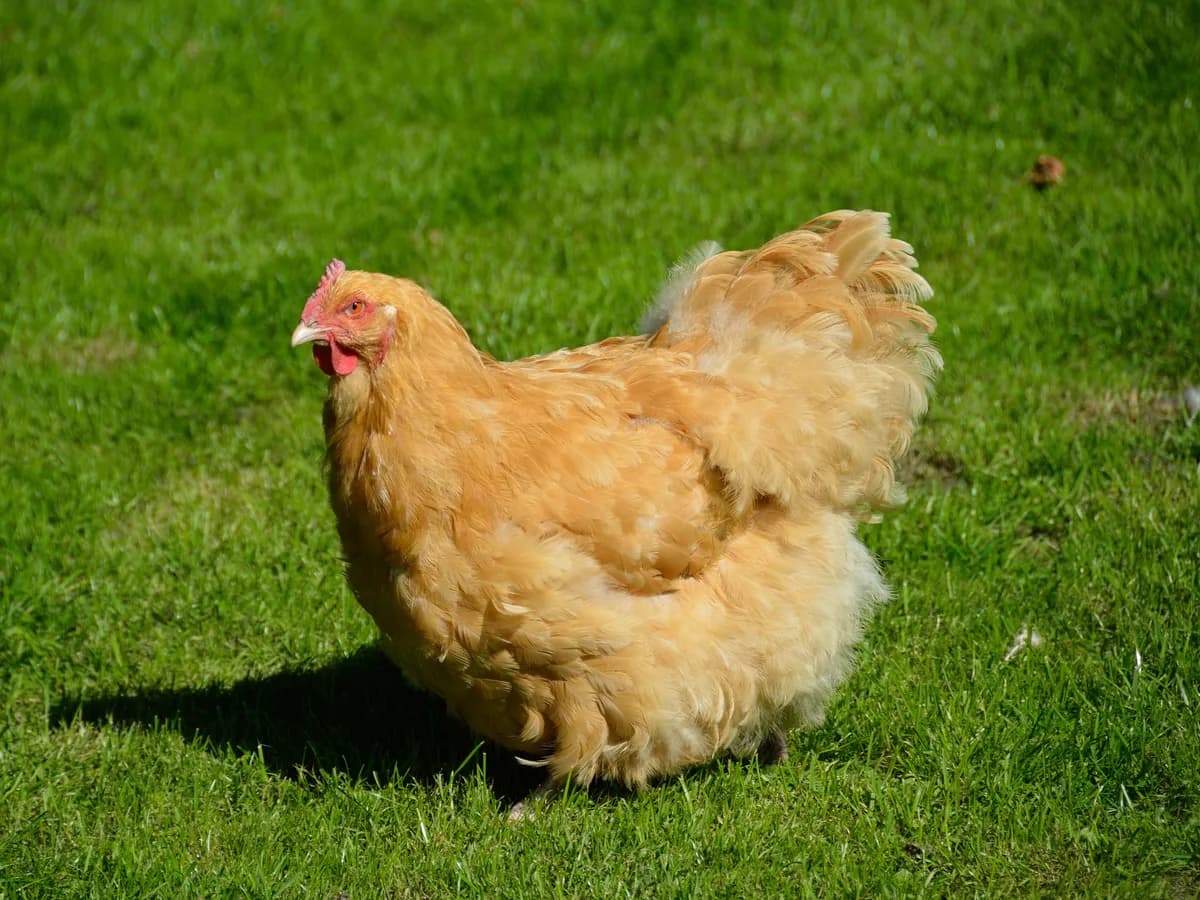
Photo: Nightflyer, CC BY 3.0, via Wikimedia Commons, cropped

Cochin at a glance
Large and heavy
- Origin
- From the Shantung province of China, north of Shanghai; much of its development happened in the US.[3][4]
- Bantam
- Yes.[2]
- Temperament
- Friendly, docile and extremely gentle; easily tamed and kept as pets.[3]
- Cold
- All that feathering makes them cold-hardy.[3]
- Heat
- Needs shade in hot weather.[3]
Facts no source backs up are left out. Updated October 26, 2026 (how we check).
A Cochin looks like a feather duster that learned to walk. Soft feathers cover the whole bird right down to the toes, and underneath is one of the gentlest personalities in the chicken world.
From China, refined in America
The Livestock Conservancy traces the Cochin to the Shantung province of China, north of Shanghai, and UW–Madison notes it "underwent considerable development in the U.S." The Buff, Partridge, White and Black varieties were admitted to the American Poultry Association's Standard in 1874, in the Asiatic class. Today the APA recognizes Barred, Black, Blue, Brown, Buff, Golden Laced, Partridge, Silver Laced and White.
A big, fluffy bird
Cochins are large: the standard weight is 11 lb for a rooster and 8.5 lb for a hen (Livestock Conservancy, UW–Madison). Ohio State calls them "one of the largest breeds." Bantam Cochins exist too.
Eggs
Cochins lay brown eggs, but sources disagree on how many and how big. The Livestock Conservancy says 150 to 200 medium to large eggs a year; University of New Hampshire Extension says 100 to 160, and Ohio State rates the eggs small. Cochins are kept more for their looks and personalities than for production.
Want to know when pullets will start? Our Laying Calculator uses the heavy-breed setting, since heavier breeds tend to mature later. Then log what they lay in the Egg Log.
The broodiest hen around
"As a broody fowl, they have no equal," says the Livestock Conservancy. UW–Madison notes their "extremely persistent broodiness," and Oregon State calls Cochins and Silkies "champions at going broody." If you want a hen to hatch chicks, a Cochin is a natural. If you want steady eggs, know that a broody hen stops laying while she sits.
Setting eggs under a broody Cochin? Our Hatch Countdown gives the due date, candling days and lockdown day.
Temperament
The Livestock Conservancy describes Cochins as "friendly, docile" birds with "extremely gentle dispositions" that are "easily tamed," and lists pets among their uses. That gentle nature suits families.
Climate
The Livestock Conservancy says all that feathering makes Cochins cold-hardy, and that they need shade in hot weather.
Conservation
The Livestock Conservancy's priority list shows the Cochin as Watch, while its own Cochin page says Recovering. Either way, keeping well-bred Cochins helps the breed.
How to recognize a Cochin
The Livestock Conservancy describes feathering that "extends down the legs to the feet and toes," small rounded single combs on hens (medium on roosters) and red earlobes. UW–Madison and Illinois Extension list yellow skin. A Buff Orpington can look similar, but its legs are clean.
Is a Cochin right for you?
Choose Cochins if you want a gentle, fluffy pet that will raise chicks for you, and you don't mind fewer eggs. For a smaller fluffy broody, see the Silkie; for another feather-footed gentle giant, meet the Brahma.
Our free Egg Color Chart printable shows the Cochin's brown eggs alongside every breed here.