Black Copper Marans
The chocolate-egg chicken: famous for very dark reddish-brown eggs, from the marshes of western France.
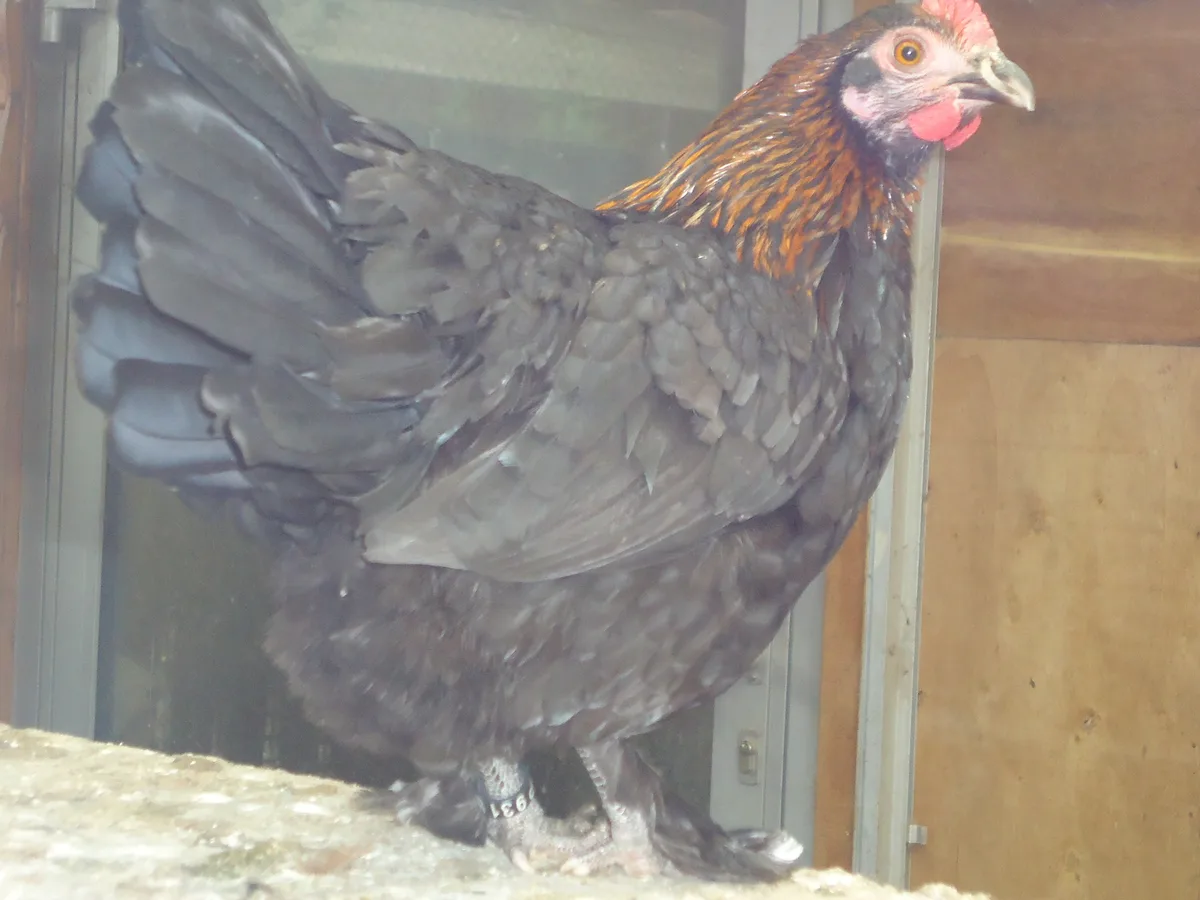
Photo: Uikitireza, CC BY-SA 4.0, via Wikimedia Commons, cropped

Black Copper Marans at a glance
Medium, dual-purpose
- Eggs per year
- About three large eggs a week[3]
- Weight
- Standard 8 lb rooster, 6.5 lb hen.[2]
- Bantam
- No bantam on the APA list.[1]
- Temperament
- Handles confinement well but is not especially docile.[3]
- Broodiness
- Shows good brooding behavior.[3]
- Cold
- Winter-hardy.[3]
- Varieties
- APA: Black, Black Copper, Wheaten and White[1]
- Conservation
- Not on the Livestock Conservancy's priority list.[6]
Facts no source backs up are left out. Updated October 26, 2026 (how we check).
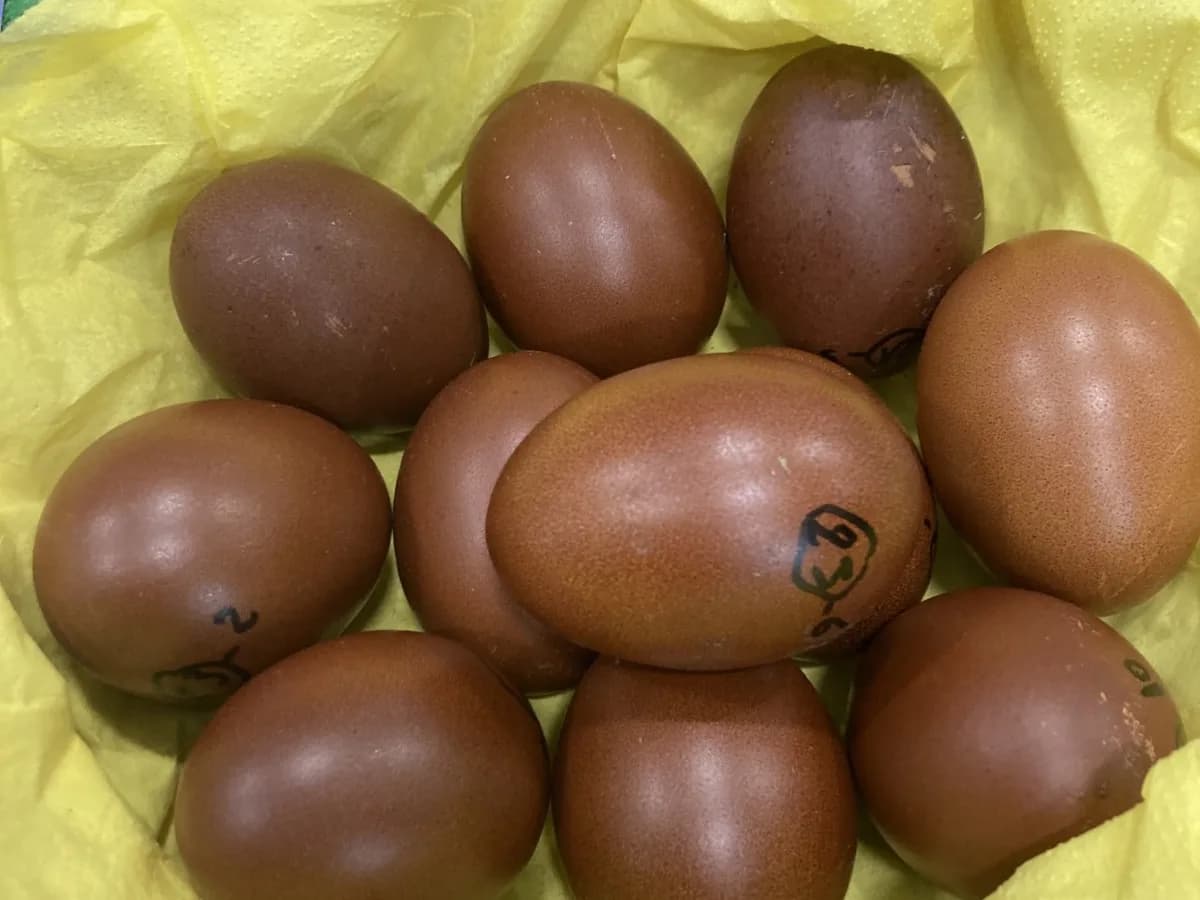
Photo: Thomon, CC BY-SA 4.0, via Wikimedia Commons, cropped

Marans are the chocolate-egg chickens. Drop one of their deep reddish-brown eggs into a carton and everything else looks pale next to it. The Black Copper is the best-known variety, and according to Oklahoma State it lays some of the darkest eggs of all.
From the French coast
UW–Madison Extension says Marans "originated in France along the marshy areas along the Atlantic coast," and the breed is named after the port town of Marans. The American Poultry Association recognizes it in the Continental class, as large fowl only, in Black, Black Copper, Wheaten and White.
Oklahoma State notes many other varieties exist outside the APA list.
Eggs: why people keep them
UW–Madison describes the eggshell as "very dark reddish brown," and Poultry Extension calls it "dark, chocolate-colored." Oklahoma State says the Black Copper (and, less so, the Silver Cuckoo) have the darkest coloring and are the most valued. Ohio State rates the eggs extra large.
How many? Oklahoma State says Marans lay about three large eggs a week. That's a modest, steady supply of the prettiest eggs in the coop.
Count them in our Egg Log, and time your pullets' first egg with the Laying Calculator.
Temperament
Oklahoma State says Marans "deal with confinement well, and are not especially docile." They're practical farm birds rather than lap chickens.
Broodiness and hardiness
Oklahoma State says Marans "exhibit brooding behavior well" and lists winter hardiness among their traits. None of our sources rate their heat tolerance, so give them the shade and fresh water every flock needs in summer.
Size
The standard weight is 8 lb for a rooster and 6.5 lb for a hen (UW–Madison), and Oklahoma State describes a large, heavy bird of about 7 to 8 lb. There's no bantam Marans on the APA list. UW–Madison describes Marans as medium-sized birds with "a rugged farm bird appearance."
Feathered legs: French vs. English type
UW–Madison explains that two types of Marans came to the US. The French type, which the APA recognizes, has lightly feathered shanks and toes. The "English" type has a clean leg. For exhibition, a lack of feathering on the leg is a disqualification.
How to recognize a Black Copper Marans
Look for a single comb (Oklahoma State), white skin (UW–Madison) and, in French-type birds, lightly feathered shanks and toes. The real proof is in the nest box: a very dark reddish-brown egg.
Is a Black Copper Marans right for you?
Choose Black Copper Marans if you want the darkest eggs in the neighborhood and a hardy, practical bird. For a friendlier temperament, pair them with a few Buff Orpingtons. For blue and green eggs to go with the chocolate, add an Easter Egger.
See every shade from white to chocolate on our free Egg Color Chart printable.