Buff Orpington
The big, golden, famously calm hen: a winter layer and a devoted mother, ideal for beginners.
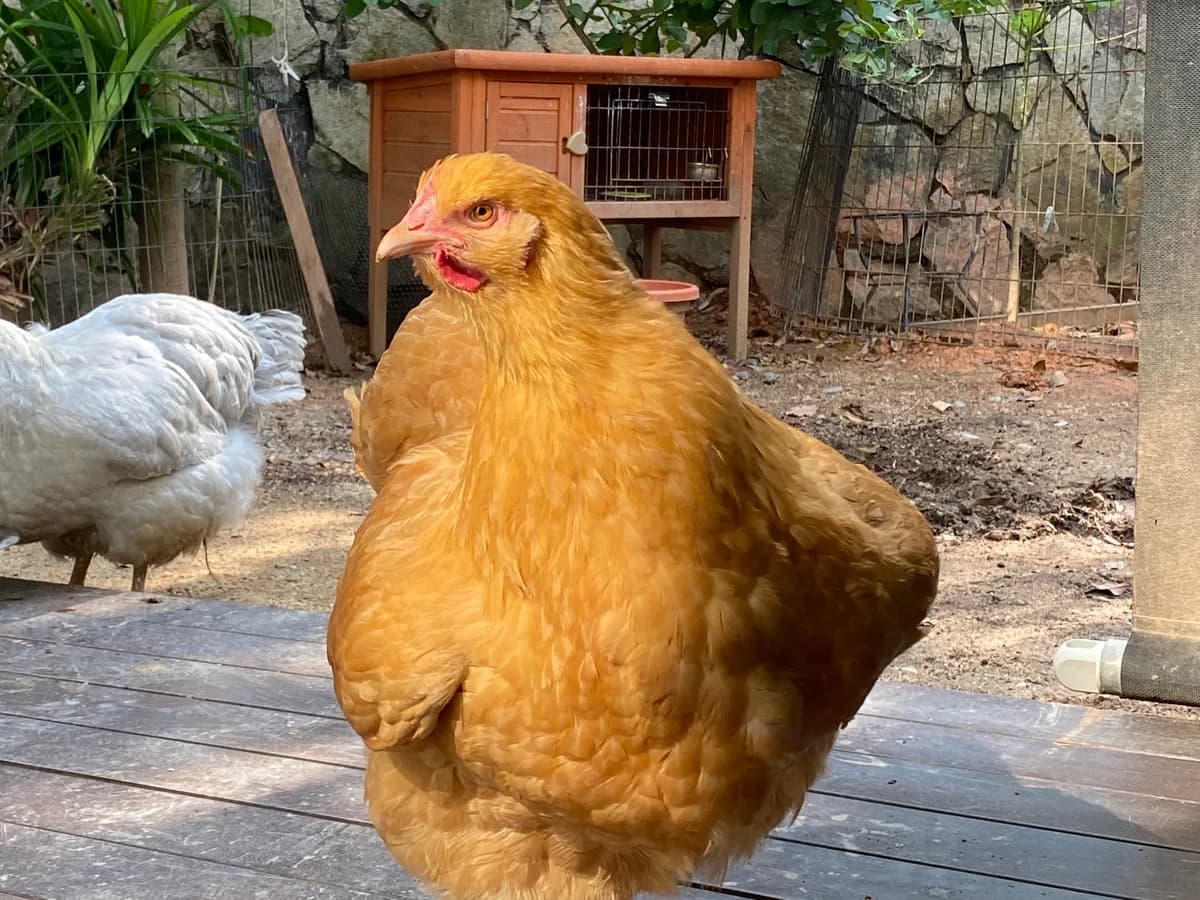
Photo: Champdug, CC BY-SA 4.0, via Wikimedia Commons, cropped

Buff Orpington at a glance
Medium, dual-purpose
- Eggs per year
- 200–280[8]
- Bantam
- Yes.[6]
- Good for beginners
- Ohio State lists Orpingtons among good choices for novice keepers.[7]
- Broodiness
- Very good mothering ability.[5]
- Cold
- Known to lay well in the winter months.[7]
- Varieties
- Buff (1902), Black and White (1905), Blue (1923)[2]
- Conservation
- Graduated from the Livestock Conservancy's priority list in 2016.[2]
- How to spot one
- Even golden-buff plumage on a broad, fluffy body; single comb, red earlobes, white skin and white, clean shanks.[4]
Facts no source backs up are left out. Updated October 26, 2026 (how we check).
Big, golden and famously sweet-natured, the Buff Orpington is the hen many people picture when they imagine a pet chicken that also fills the egg basket. It's fluffy, calm and reliable, and it lays through the winter better than many breeds.
From Kent, England
The Orpington was created by William Cook in the town of Orpington, Kent, England, according to the Livestock Conservancy, and Illinois Extension says the breed came to America in 1890. The Buff variety was admitted to the American Poultry Association's Standard in 1902, in the English class. Black and White followed in 1905 and Blue in 1923.
The Livestock Conservancy graduated the Orpington from its priority list in 2016, so it's no longer considered endangered.
Eggs
University of New Hampshire Extension puts the Buff Orpington at 200 to 280 eggs a year. The Livestock Conservancy describes large, light to dark brown eggs. Ohio State calls the Orpington "an excellent egg layer" that is "known to lay well in the winter months too," a real plus when other hens slow down.
Find out when your pullets should start laying with our Laying Calculator, and log the first egg in the Egg Log.
Temperament
This is where the Buff Orpington shines. The Livestock Conservancy describes a "calm, friendly disposition," and Mississippi State calls them calm and docile. They're a good fit for families and for keepers who like to handle their birds.
Ohio State lists Orpingtons among the breeds that may be good choices for the novice backyard poultry enthusiast.
Broody and motherly
Mississippi State notes the Orpington's very good mothering abilities, and many hens go broody. If you'd like a hen to hatch and raise chicks, that's a gift. If you only want eggs, expect the occasional hen to sit tight on the nest for a few weeks.
Size
Orpingtons are big birds. The Livestock Conservancy gives 10 lb for males and 8 lb for females, matching UF/IFAS. Mississippi State says backyard adults usually weigh 7 to 10 lb. There's a bantam version too (Delaware State Extension).
All those soft feathers make them look even bigger than they are. Give them sturdy roosts and nest boxes built for a large hen.
How to recognize a Buff Orpington
Look for even golden-buff plumage on a broad, deep body. UF/IFAS lists a single comb, red earlobes, white skin and white, unfeathered shanks. A Cochin can look similar in buff, but Cochins have feathers down their legs.
Is a Buff Orpington right for you?
Choose Buff Orpingtons for a calm, friendly flock that keeps laying into winter and may raise chicks for you. For a similar temperament in glossy black with even more eggs, see the Australorp. For the ultimate broody, meet the Cochin.
Planning a mixed basket? Our free Egg Color Chart printable shows each breed's shell color on one page.