Wyandotte
Curvy, cold-hardy and gorgeous in its laced varieties, with a rose comb that shrugs off frost.
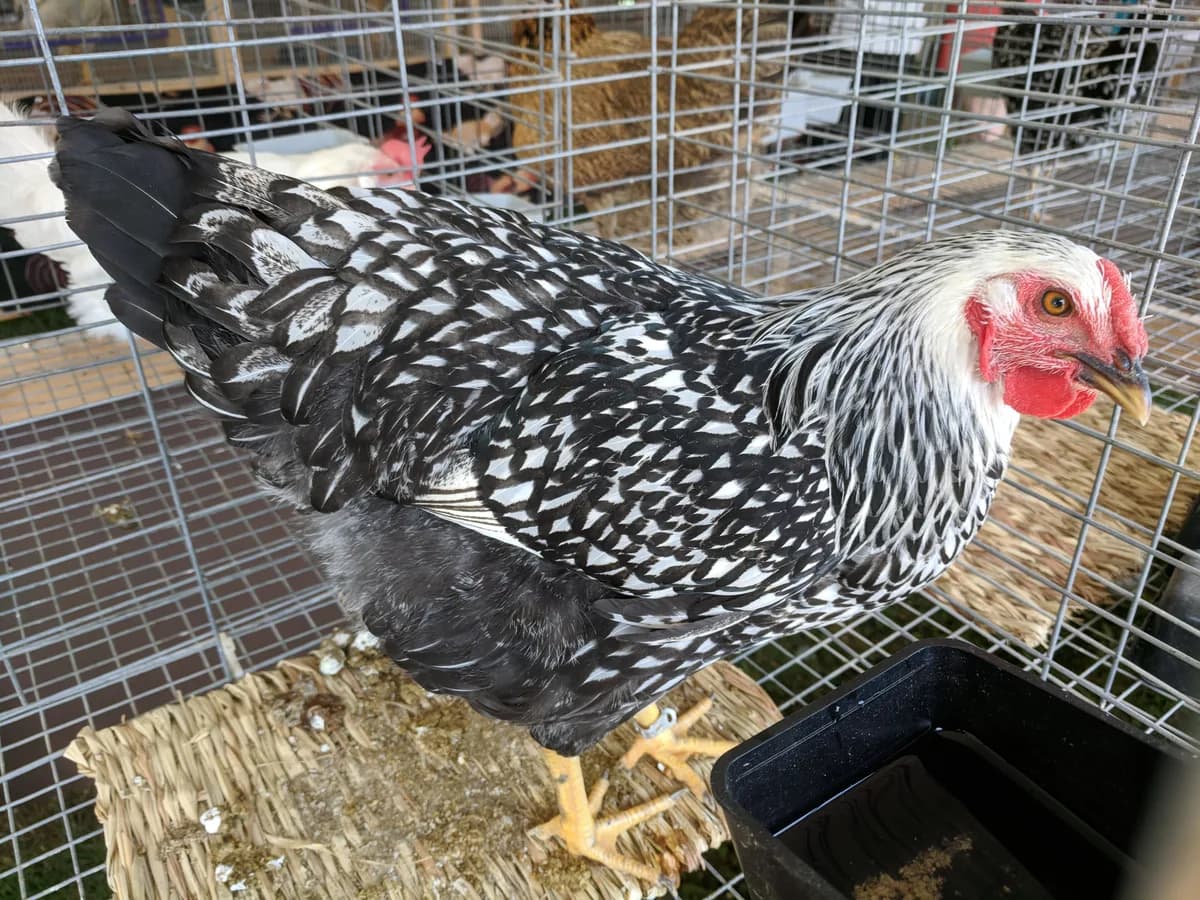
Photo: DanielPenfield, CC BY-SA 4.0, via Wikimedia Commons, cropped

Wyandotte at a glance
Medium, dual-purpose
- Egg size
- Large[6]
- Bantam
- Yes.[5]
- Good for beginners
- Ohio State lists Wyandottes among good choices for novice keepers.[6]
- Broodiness
- The hens make good mothers.[2]
- Heat
- Does not do well in the heat.[3]
- Varieties
- Silver Laced (1883), Golden Laced (1888), White and Buff (1893), Partridge (1901), Silver Penciled (1902), Columbian (1905); Blue and Black are also listed[1][2]
- Conservation
- Not on the Livestock Conservancy's priority list.[7]
Facts no source backs up are left out. Updated October 26, 2026 (how we check).
With their curvy shape, rose combs and dazzling laced feathers, Wyandottes are some of the prettiest hens in any backyard. They're also tough, calm birds built for cold winters.
Born in New York
The Wyandotte was developed in New York State in the late 1800s (Mississippi State Extension). Oklahoma State says it was first called the American Sebright, later renamed after the Wyandot people, and the Silver Laced variety was recognized by the American Poultry Association in 1883, in the American class.
Golden Laced followed in 1888, White and Buff in 1893, Partridge in 1901, Silver Penciled in 1902 and Columbian in 1905 (Illinois Extension). Oklahoma State also lists Blue and Black.
Eggs
Wyandotte hens lay light to dark brown eggs (Mississippi State) that Ohio State rates large. None of our extension sources give a yearly egg count for Wyandottes, so we won't make one up. If you keep them, our Egg Log will tell you exactly what your hens lay. To time the first egg, use the Laying Calculator.
Made for winter
Here's where Wyandottes shine. Mississippi State calls them "quite cold hardy," and Ohio State lists them as "cold weather hardy." Oklahoma State explains one reason: their rose combs "do not freeze as easily as single combs." Oklahoma State calls them a good, medium-weight fowl for small family flocks kept under rugged conditions.
The flip side, per Mississippi State: they "do not do well in the heat." In hot summers give them deep shade and good airflow.
Temperament
Mississippi State describes Wyandottes as "relatively docile," and Oklahoma State mentions their generally good disposition. Ohio State lists them among breeds that may be good choices for novice keepers. They're also a favorite on the show circuit.
Broodiness
Oklahoma State says Wyandotte hens make good mothers, so expect some to go broody.
Size
The standard weight is 8.5 lb for a rooster and 6.5 lb for a hen (UF/IFAS and Oklahoma State); Mississippi State says adults usually weigh 5.5 to 8.5 lb. There's a bantam version (Delaware State Extension).
How to recognize a Wyandotte
The low, flat rose comb is the giveaway. UF/IFAS lists red earlobes and yellow skin with yellow, unfeathered shanks, and Oklahoma State describes the breed's attractive "curvy" shape. Oklahoma State adds a breeder's note: single-combed chicks sometimes hatch from rose-combed parents, and those birds shouldn't be used for breeding.
Is a Wyandotte right for you?
If you live where winters bite, a Wyandotte is one of the best choices you can make, and it looks great doing it. In hot climates, consider a heat-tolerant breed like the White Leghorn instead. For another cold-hardy beginner bird, see the Barred Plymouth Rock.
Our free Egg Color Chart printable shows the Wyandotte's eggs next to every other breed in this directory.