Australorp
Glossy black, friendly and a famous layer: an Australorp holds a record of 364 eggs in 365 days.
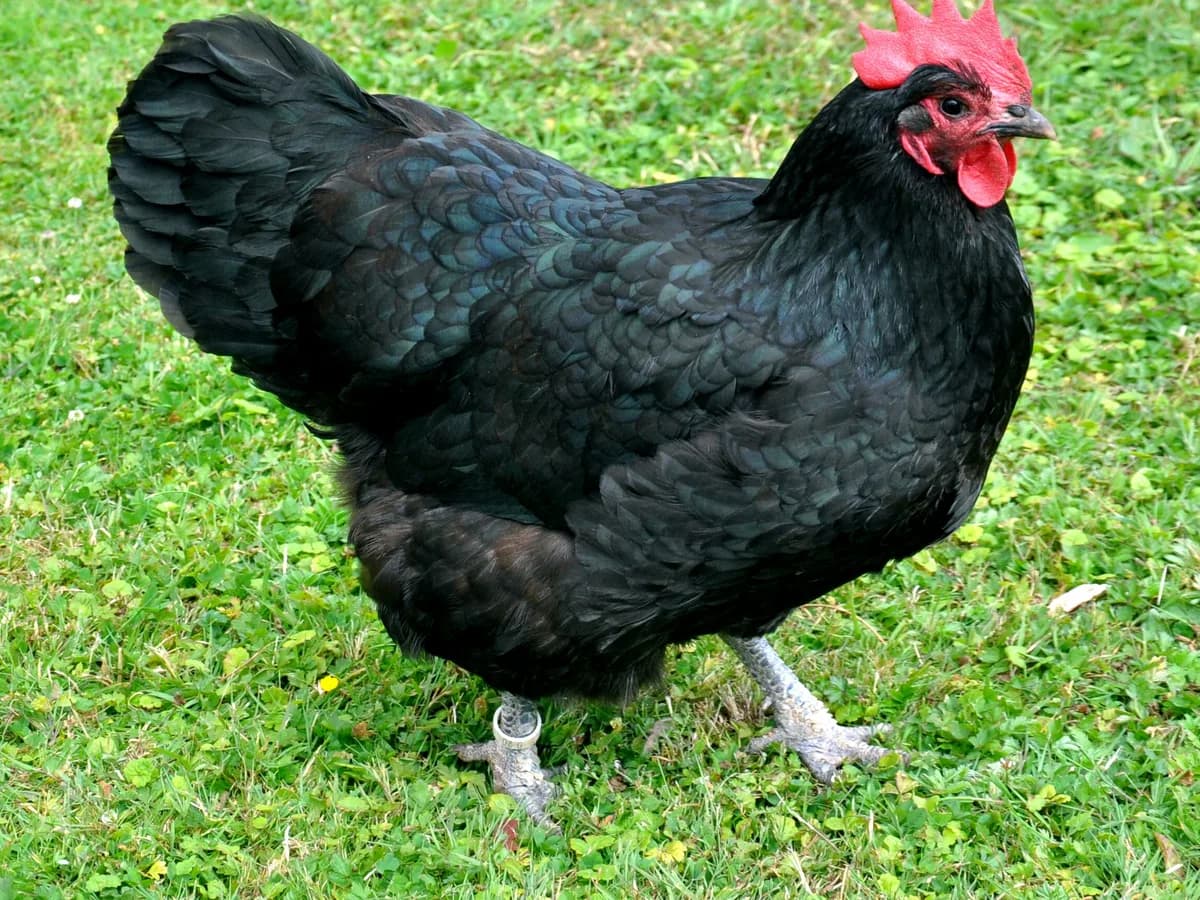
Photo: Palauenc05, CC BY-SA 3.0, via Wikimedia Commons, cropped

Australorp at a glance
Medium, dual-purpose
- Eggs per year
- 250 or more (UNH says 200–280); one hen laid 364 eggs in 365 days in an official test[1][7][3]
- Bantam
- Yes.[2]
- Temperament
- Friendly, even the roosters; active yet gentle.[1]
- Broodiness
- Generally good sitters and mothers, though early breeders worked to breed broodiness out.[1][5]
- Heat
- Black feathers soak up sun, so give them shade in hot weather.[1]
- Varieties
- Black is the only US variety.[1]
- Conservation
- Graduated from the Livestock Conservancy's priority list in 2023.[1]
Facts no source backs up are left out. Updated October 26, 2026 (how we check).
The Australorp is a glossy black hen with a beetle-green sheen, a friendly personality and a world-famous laying record. If you want plenty of eggs from a calm bird, it belongs on your shortlist.
Made in Australia
The Australorp was developed in Australia from Black Orpington stock, according to Oklahoma State. The Livestock Conservancy says the Orpingtons were imported into Australia between 1890 and about 1900. The American Poultry Association recognized the breed in 1929, in the English class.
Oklahoma State notes it's smaller and trimmer than the Orpington. The Livestock Conservancy graduated the Australorp from its priority list in 2023.
Eggs: the record-holder
The Australorp's claim to fame is laying. Oklahoma State reports that an Australorp hen laid 364 eggs in 365 days under official Australian trap-nest testing. Your hens won't match that, but the Livestock Conservancy puts typical production at 250 or more eggs a year, and University of New Hampshire Extension says 200 to 280.
The eggs are medium to large. Sources describe the shell a little differently: tinted to light brown (Livestock Conservancy), light brown (Ohio State) or simply brown (UF/IFAS and Oklahoma State).
Use our Laying Calculator to see when your pullets will start, and our Egg Log to see how close they come to that record.
Temperament
The Livestock Conservancy describes Australorps as "friendly (even the roosters)" and "active, yet gentle." Oklahoma State calls them very active. They enjoy foraging but settle well into a backyard routine.
Broodiness
Sources pull both ways here. The Livestock Conservancy says Australorps are generally considered good sitters and mothers, but also that early breeders worked to breed broodiness out. Expect some hens to go broody and others never to.
Size
The standard weight is 8.5 lb for a rooster and 6.5 lb for a hen (Livestock Conservancy, UF/IFAS). Mississippi State says backyard adults usually weigh 4.5 to 8.5 lb. A bantam version exists (Delaware State Extension). In the US, black is the only variety (Livestock Conservancy).
Climate
Those black feathers soak up the sun. The Livestock Conservancy advises giving Australorps shade in hot weather. None of our sources give a cold-hardiness rating, so in winter give them the dry, draft-free coop every flock needs.
How to recognize an Australorp
The Livestock Conservancy and Oklahoma State describe black plumage with an intense beetle-green sheen, dark eyes, a moderately large red single comb, red earlobes, and slate-colored shanks with pinkish-white soles. The legs are clean, without feathers.
Is an Australorp right for you?
Pick Australorps if eggs come first and you'd like a friendly bird. For a fluffier, golden cousin with the same Orpington roots, see the Buff Orpington. For white eggs and even more of them, compare the White Leghorn.
See how the Australorp's eggs compare with every other breed here on our free Egg Color Chart printable.