Easter Egger
Hybrid: not an APA-recognized breed
Not a breed but a beloved mix: hens that lay blue, green or even pinkish eggs. No two look alike.
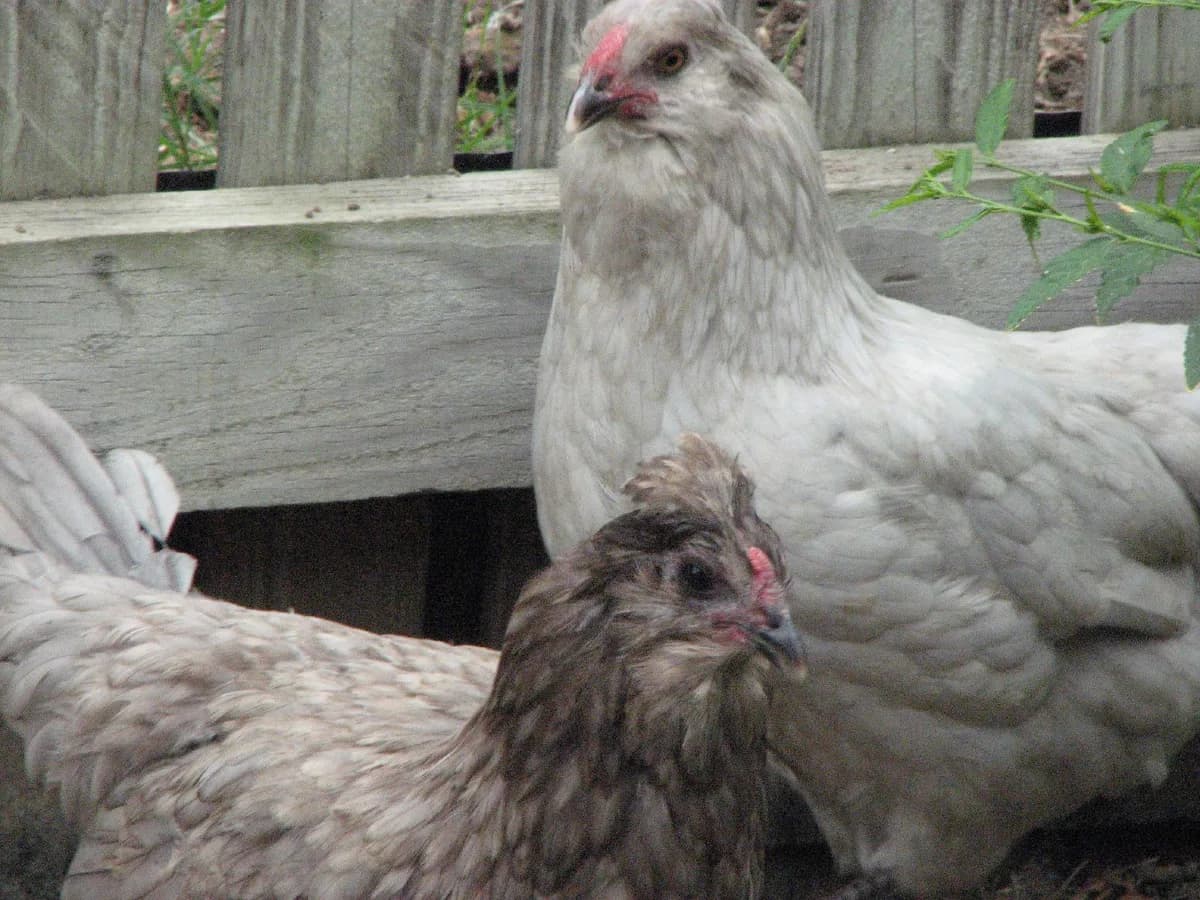
Photo: Rob and Stephanie Levy from Townsville, Australia, CC BY 2.0, via Wikimedia Commons, cropped

Easter Egger at a glance
- Status
- Not an APA breed. An Easter Egger is a mixed-breed chicken that carries the blue-egg gene, usually an Ameraucana or Araucana cross, or a bird that doesn't meet the Ameraucana standard.[1][2][3]
- Origin
- Comes from crossing Ameraucanas or Araucanas with other breeds. The Ameraucana itself was developed in the United States in the 1970s.[1][2]
- Eggs per year
- 180–200 (UNH, for Ameraucanas and Easter Eggers)[5]
Facts no source backs up are left out. Updated October 26, 2026 (how we check).
Easter Eggers are the reason many backyard egg cartons look like a box of pastel candy. These hens lay blue, green or even pinkish eggs, and because every bird is a little different, no two Easter Eggers look quite alike.
One thing to know up front: the Easter Egger is not a breed. It isn't on the American Poultry Association's list of recognized breeds. It's a mix that carries the colored-egg gene.
What exactly is an Easter Egger?
UW–Madison Extension says Easter Eggers "are a cross of Ameraucanas and another breed to get the desired egg color." Poultry Extension explains that when the Araucana is crossed with other breeds, the result is a chicken that lays colored eggs, and that a bird whose feathering doesn't meet the APA standard "typically is referred to as an Easter Egger."
So you'll find Easter Eggers in every color and pattern. Oklahoma State sums it up: they lay blue and green eggs but "don't conform to any breed characteristics."
Easter Egger vs. Ameraucana vs. Araucana
These three get mixed up constantly:
- Ameraucana: an APA breed developed in the United States in the 1970s (UW–Madison), with a beard, muffs and a small pea comb. It's bred to a written standard, including leg color.
- Araucana: an APA breed that Poultry Extension describes as a South American bird "that has feather tufts around the face and no tail."
- Easter Egger: a mixed-breed hen that carries the colored-egg gene from one of those parents but isn't bred to either standard.
Eggs: the whole point
Poultry Extension describes the eggs as light blue, green or pinkish, and says eggs from Ameraucana and Easter Egger hens "vary from pink to green."
University of New Hampshire Extension puts Ameraucanas and Easter Eggers at 180 to 200 eggs a year. That's fewer than a production breed like the Leghorn, but every one is a conversation piece.
Track which hens are laying with our free Egg Log. For first-egg timing, the Laying Calculator gives the 18-to-22-week window extension sources use for pullets in general.
Size, temperament and hardiness
Because Easter Eggers are mixes, extension sources don't give them a standard weight, temperament or hardiness rating. It depends on the breeds in each bird's background. For reference, UW–Madison gives the Ameraucana parent breed a standard weight of 6.5 lb for a rooster and 5.5 lb for a hen. Mississippi State lists the Ameraucana in both its "nervous" and "aggressive" temperament groups, so don't count on calm birds from the parent breed alone.
How to recognize an Easter Egger
There's no single look. Many show their Ameraucana side, with a beard, muffs and a small pea comb (UW–Madison), and unlike the Araucana they have a tail. The surest sign is the egg: blue, green or pinkish shells from a hen that doesn't match a breed standard.
Is an Easter Egger right for you?
Choose Easter Eggers if a colorful egg basket makes you happy and you don't need show-standard birds. Pair them with a Black Copper Marans for chocolate eggs and a White Leghorn for white, and your carton will have every shade.
See the full rainbow on our free Egg Color Chart printable.