Rhode Island Red
America's classic brown-egg layer: hardy, friendly and good for 200 to 300 eggs a year.
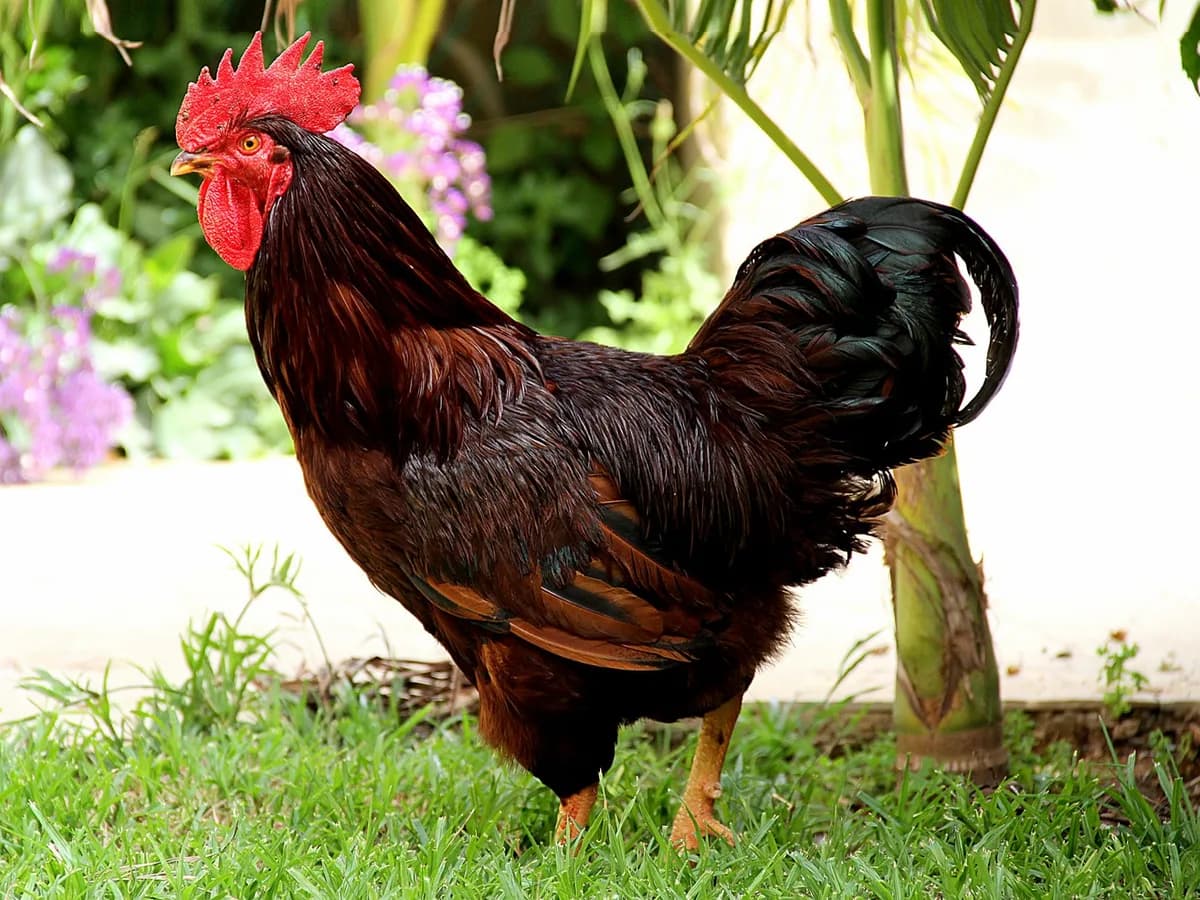
Photo: Vitag, CC BY-SA 3.0, via Wikimedia Commons, cropped

Rhode Island Red at a glance
Medium, dual-purpose
- Status
- APA breed, American class. Single Comb admitted 1904, Rose Comb 1905.[1]
- Origin
- Developed in Massachusetts and Rhode Island in the 1880s and 1890s (Mississippi State dates it to the early 1900s).[2][3]
- Weight
- Standard 8.5 lb rooster, 6.5 lb hen (the Livestock Conservancy says 8 and 6 lb). Backyard birds usually weigh 5.5 to 8.5 lb.[4][2][3]
- Bantam
- Yes, in single and rose comb.[1]
- Broodiness
- Can go broody, except in strains heavily selected for egg production.[2]
- Conservation
- Graduated from the Livestock Conservancy's priority list in 2023.[2]
Facts no source backs up are left out. Updated October 26, 2026 (how we check).
If you picture a backyard hen, there's a good chance you picture a Rhode Island Red. These deep red birds are one of America's own breeds and one of the most popular brown-egg layers anywhere, prized for being tough, productive and easy to live with.
Where Rhode Island Reds come from
The breed was developed in Massachusetts and Rhode Island in the 1880s and 1890s, according to the Livestock Conservancy (Mississippi State Extension dates it to the early 1900s). The American Poultry Association admitted the Single Comb Rhode Island Red in 1904 and the Rose Comb in 1905, both in the American class.
For a while the old farm-type birds became scarce, but the breed recovered. The Livestock Conservancy graduated the Rhode Island Red from its priority list in 2023.
Eggs: how many and what color
This is the breed's big draw. University of New Hampshire Extension puts the Rhode Island Red at 250 to 280 eggs a year, and the Livestock Conservancy gives a range of 200 to 300 because strains differ. The eggs are large and brown to dark brown.
Ohio State calls them "the best egg layer as a dual purpose breed," which is high praise for a bird that's also big enough for the table. Want to know when your pullets will start? Our Laying Calculator works it out from their hatch date, and the Egg Log tracks every egg after that.
Temperament: friendly hens, feisty roosters
Mississippi State Extension describes Rhode Island Reds as docile and friendly, and the Livestock Conservancy calls them calm. The warning comes with the boys: the Livestock Conservancy notes that some roosters may be aggressive at times. If you want a gentle flock around kids, start with hens.
Hardiness and climate
Rhode Island Reds are known for their hardiness and their ability to handle marginal conditions (Livestock Conservancy). Mississippi State adds that they continue laying into moderately cold weather. That toughness is a big reason they're recommended so often for small farms.
Rutgers Extension warns that large combs can get frostbite and suggests small-combed birds for cold areas, so in hard-winter country consider the rose-comb variety.
Size and broodiness
The standard weight is 8.5 lb for a rooster and 6.5 lb for a hen (UF/IFAS); the Livestock Conservancy lists 8 and 6 lb. Mississippi State says backyard birds usually weigh 5.5 to 8.5 lb. Bantam versions exist in both single and rose comb.
Some Rhode Island Red hens will go broody. The Livestock Conservancy says hens from production strains, which are bred hard for eggs, rarely do.
How to recognize a Rhode Island Red
Look for a long, flat-backed, oblong body (Illinois Extension), a single or rose comb, red earlobes, and yellow skin and yellow legs with no feathers on the shanks (UF/IFAS). The color is a rich, deep red.
Is a Rhode Island Red right for you?
Choose Rhode Island Reds if you want lots of brown eggs from a hardy bird that copes with cold. Think twice about a rooster if you have small children. For a calmer, fluffier alternative, look at the Buff Orpington; for even more eggs in white shells, see the White Leghorn.
Not sure what each breed's eggs will look like in your basket? Our free Egg Color Chart printable puts every breed in this directory on one page.