Jersey Giant
A true giant from New Jersey: roosters reach 13 lb or more, with a calm, friendly nature and brown eggs.
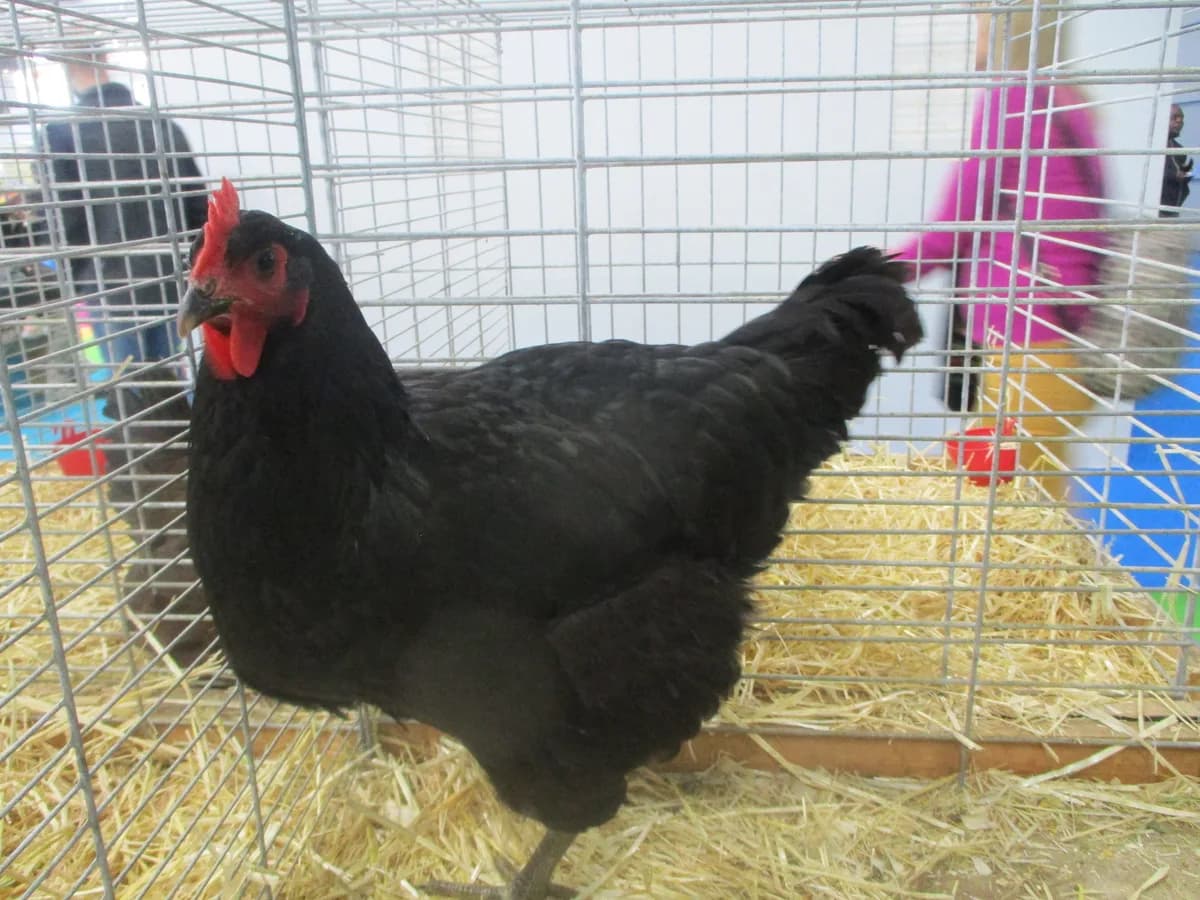
Photo: Thomon, CC BY-SA 4.0, via Wikimedia Commons, cropped

Jersey Giant at a glance
Large and heavy
- Origin
- Developed between 1870 and 1890 by John and Thomas Black in Burlington County, New Jersey, when big capons were in demand.[3][4]
- Weight
- Standard 13 lb rooster, 10 lb hen (the Livestock Conservancy says mature roosters reach 13–15 lb, hens 10–11 lb).[4][5][6][3]
- Bantam
- Yes, in Black and White.[2]
- Broodiness
- Some hens go broody and some don't; their size means they can crush eggs, so they aren't the best sitters.[3][4]
- Heat
- Does not do well in the heat.[3]
- Conservation
- Listed as Recovering by the Livestock Conservancy.[3]
Facts no source backs up are left out. Updated October 26, 2026 (how we check).
The Jersey Giant is exactly what its name promises. Roosters weigh 13 pounds or more, hens about 10, and yet the breed is known for a calm, friendly nature.
Made in New Jersey
The Livestock Conservancy says John and Thomas Black developed the Jersey Giant between 1870 and 1890 in Burlington County, New Jersey. UW–Madison explains why: at the time there was demand for heavy birds for capon production. Illinois Extension says the foundation included Black Javas, Dark Brahmas and Black Langshans.
The Black variety was admitted to the American Poultry Association's Standard in 1922 and White in 1947 (Illinois Extension); Blue is recognized too.
Size: truly giant
The standard weight is 13 lb for a rooster and 10 lb for a hen (UW–Madison, UF/IFAS, Oklahoma State). The Livestock Conservancy says mature roosters reach 13 to 15 lb and hens 10 to 11 lb, and Blacks run about a pound heavier than Whites. Bantam Jersey Giants exist in Black and White.
Plan for the size. The Livestock Conservancy recommends larger nest boxes, more room on roosting bars, and lower bars. Our Laying Calculator uses its heavy-breed setting, since heavier breeds tend to mature later.
Eggs
Jersey Giants lay brown eggs (UW–Madison); the Livestock Conservancy describes a range from light cream to dark brown. Ohio State rates them large, and the Livestock Conservancy says extra large. Expect about 150 to 200 eggs a year (Livestock Conservancy, Oklahoma State). Log them in our Egg Log.
Temperament
Mississippi State calls Jersey Giants "calm and docile" and lists them as friendly. The Livestock Conservancy agrees, and adds a note for close neighbors: the breed can be noisy.
Broodiness
Some hens go broody and some don't, says the Livestock Conservancy, and their size means they can crush eggs. UW–Madison agrees they aren't the best choice for incubating and brooding.
Weather
The Livestock Conservancy calls them a very cold-hardy breed, though roosters' large single combs can get frostbite, and says they do not do well in the heat. Mississippi State calls them fairly cold-hardy.
Conservation
The Livestock Conservancy lists the Jersey Giant as Recovering, so raising them helps a heritage breed.
How to recognize a Jersey Giant
UF/IFAS lists a single comb, red earlobes, yellow skin and black shanks with no leg feathers; the Livestock Conservancy adds yellow soles and a beetle-green sheen on Black birds. The sheer size is the biggest clue.
Is a Jersey Giant right for you?
Choose Jersey Giants if you have cold winters, space for big birds and want a calm flock. In hot climates, look at a lighter breed. For another heavy, gentle bird, compare the Brahma; for a smaller glossy black hen, see the Australorp.
Compare egg colors on our free Egg Color Chart printable.