Polish
The rock star of the coop: a huge feathered crest, white eggs and a gentle but easily startled nature.
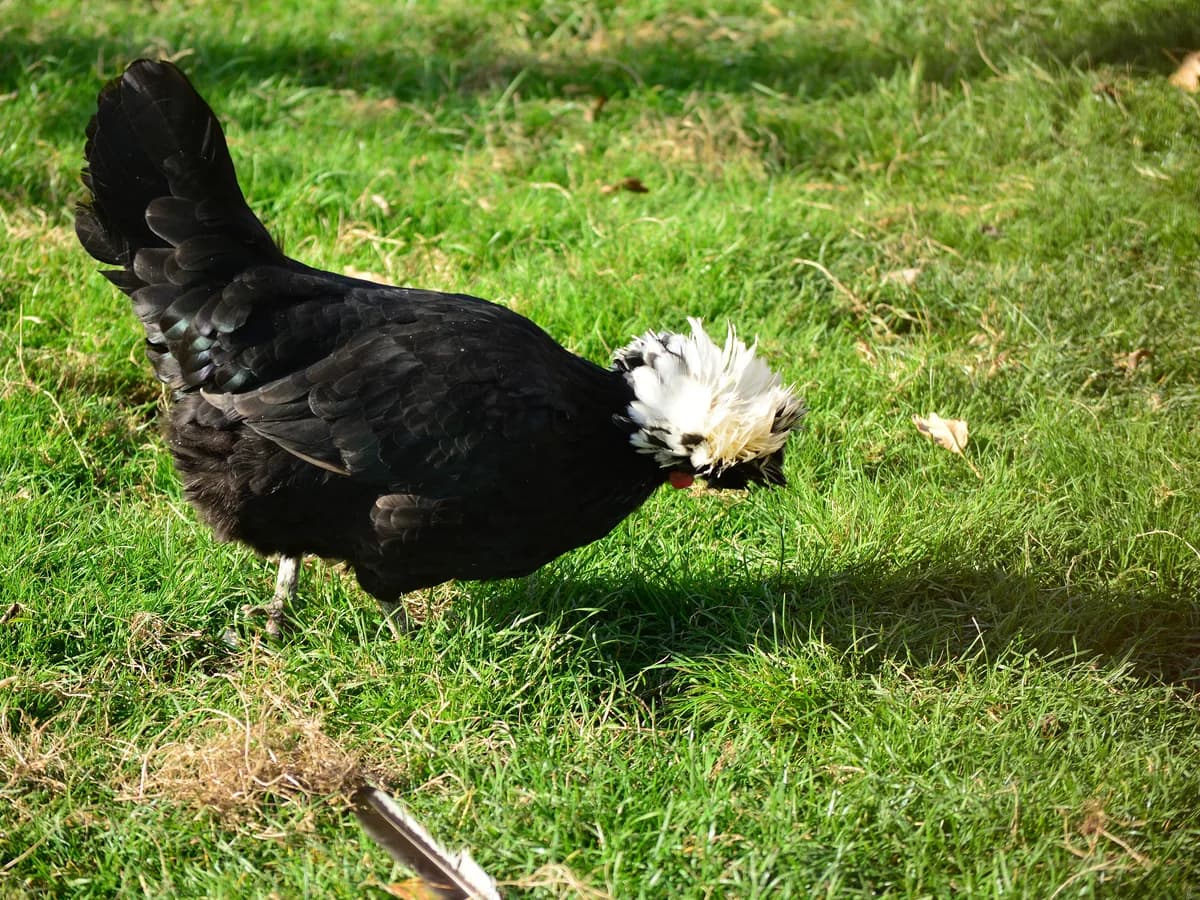
Photo: Joe Mabel, CC BY-SA 4.0, via Wikimedia Commons, cropped

Polish at a glance
Lightweight
- Status
- APA breed, Continental class, with bearded and non-bearded varieties. The first were admitted in 1874.[1][2][3]
- Egg color
- White[3]
- Eggs per year
- Sources differ: about 200 or more (Oklahoma State), excellent layers (Mississippi State), or strictly ornamental (UW–Madison)[4][6][3]
- Egg size
- Medium[7]
- Temperament
- Calm and gentle but easily frightened, partly because the crest blocks their view; Mississippi State lists them as flighty. Other breeds may bully them.[4][6][3]
- Cold
- Ice can form in the crest from drinking water in cold weather.[3]
Facts no source backs up are left out. Updated October 26, 2026 (how we check).
No chicken turns heads like a Polish. That huge pom-pom of feathers grows from a knob on the top of the skull, and it gives the breed both its charm and its quirks.
An old breed of unknown origin
Nobody knows exactly where the Polish came from. UW–Madison Extension says probably Eastern Europe, "although they are so old that their history has been obscured." Oklahoma State notes paintings show them in the 1600s, and Illinois Extension says the Polish was mentioned as a pure breed as early as the sixteenth century.
The American Poultry Association admitted the first Polish varieties in 1874. Today it recognizes non-bearded and bearded varieties, all in the Continental class, with bantams too.
Eggs
Polish lay white eggs (UW–Madison), rated medium by Ohio State. How many is a matter of debate: Oklahoma State says around 200 or more a year and Mississippi State calls them excellent layers, but UW–Madison calls the Polish "a strictly ornamental fowl." Your Egg Log will tell you which camp your hens are in.
They're light birds, so the Laying Calculator uses its lightweight setting.
Temperament and the crest
Oklahoma State describes "a calm and gentle disposition," but adds that Polish "are easily frightened and are prone to being bullied by other more aggressive breeds." Mississippi State lists them as flighty. UW–Madison explains part of the reason: their crests can restrict their vision.
A few care notes from extension sources:
- Space: UW–Madison says they need plenty of room so they don't damage each other's crests by pecking.
- Winter water: ice can form in the crest from drinking water in cold weather (UW–Madison).
- Parasites: Oklahoma State notes the crest is susceptible to lice, so check it when you check the flock.
- Predators: Mississippi State warns of a greater risk from aerial predators if they free-range.
Broodiness
Polish rarely go broody, says Mississippi State, and Illinois Extension calls them a non-sitter.
Size
The standard weight is 6 lb for a rooster and 4.5 lb for a hen (UW–Madison, Oklahoma State).
How to recognize a Polish
The crest is unmistakable. Under it, Oklahoma State describes a small V-shaped comb, red wattles, white earlobes and gray shanks, and UW–Madison notes white skin and that some varieties have a beard and muffs.
Is a Polish right for you?
Choose Polish for personality and looks, with a sheltered run and calm flockmates. For another unusual breed, meet the Salmon Faverolles or the fluffy Silkie.
See where white eggs fit on our free Egg Color Chart printable.