Chickens That Lay Colored Eggs: Blue, Green and Chocolate
Updated October 26, 2026 · Fact-checked against university extension sources (how we check)
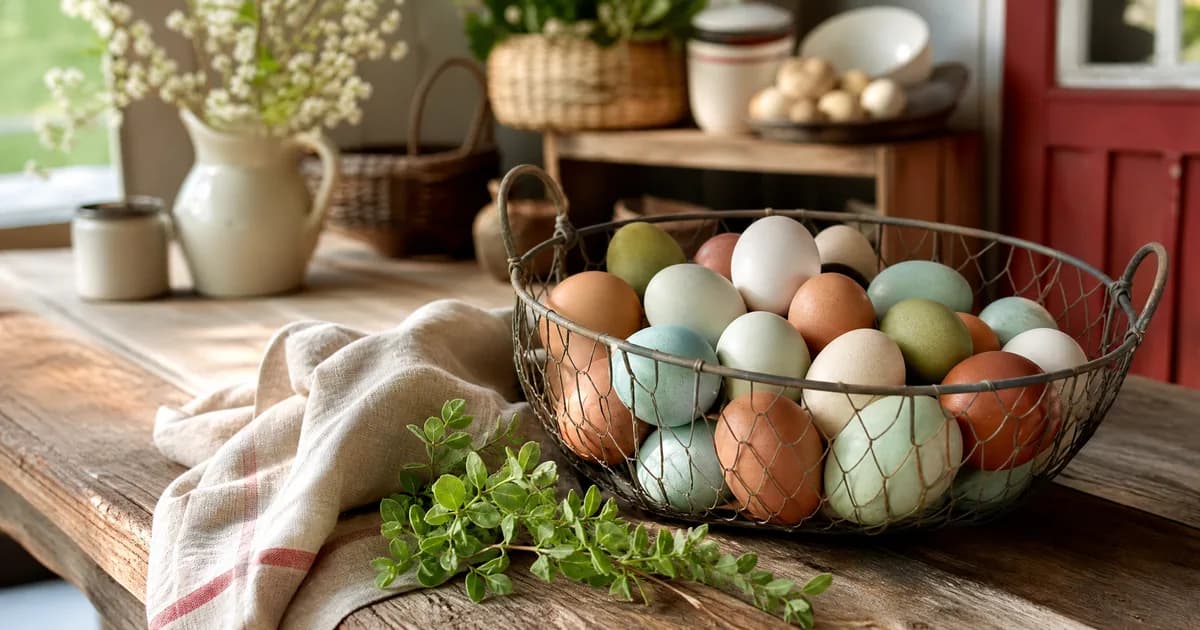
A carton of mixed blue, green, olive, chocolate and cream eggs is one of the joys of a backyard flock. Shell color is set by the hen's breed, so a rainbow basket starts with choosing the right birds. Here's who lays what, according to university extension sources.
For every breed on one page, grab our free Egg Color Chart printable. To shop by color, use the egg color filter in our Breed Directory.
Why eggs come in different colors
Two facts from extension specialists explain most of it:
- Blue goes all the way through; brown sits on the outside. UW–Madison Extension explains that pure Ameraucana or Araucana eggs are blue through the entire shell, inside and out, while with olive-green eggs "the pigment is added just to the outside of the shell."
- Blue is a dominant trait. Poultry Extension notes "the blue egg color is a dominant trait," which is why crossing a blue-egg breed with other breeds gives hens that lay colored eggs.
And a handy rule of thumb from UF/IFAS Extension: a hen's earlobe color will, in many cases, correspond to the color of her eggs. White-earlobed Leghorns lay white eggs; most red-earlobed breeds lay brown.
Blue eggs
Ameraucana
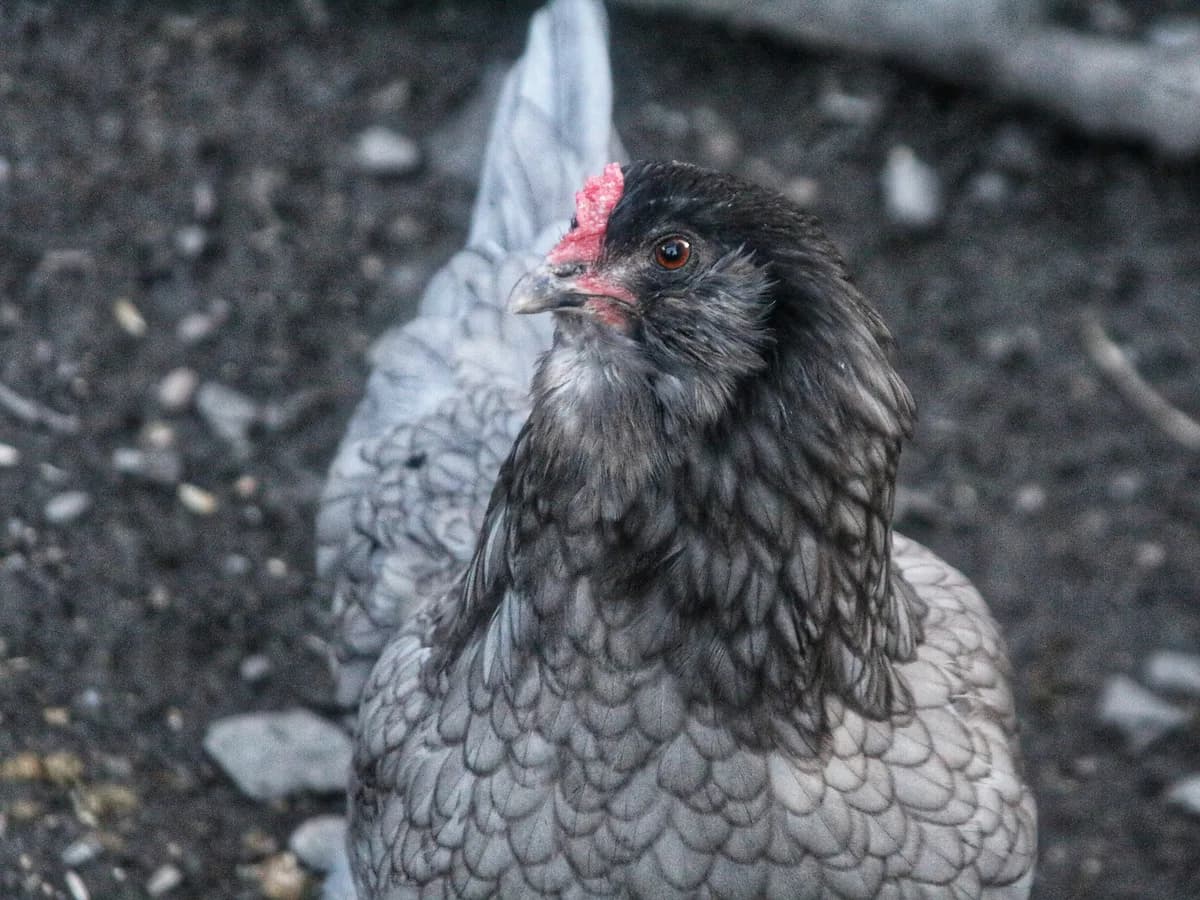
Photo: J. Tönz, CC BY-SA 4.0, via Wikimedia Commons, cropped

The Ameraucana is the standardized American blue-egg breed, developed in the United States in the 1970s (UW–Madison). UW–Madison lists its eggshell as blue/pastel and Ohio State as blue/green. University of New Hampshire Extension puts Ameraucanas and Easter Eggers at 180 to 200 eggs a year. Ameraucana profile.
Blue, green or pinkish eggs
Easter Egger
Easter Eggers aren't a breed: UW–Madison describes them as a cross of Ameraucanas and another breed. Poultry Extension says eggs from Ameraucana and Easter Egger hens "vary from pink to green." Oklahoma State notes they don't conform to any breed characteristics, so every bird looks different. Easter Egger profile.
Olive eggs
Olive Egger
An Olive Egger is a cross of a blue-egg layer and a brown-egg layer. UW–Madison explains that "olive green eggs are crossbreds of blue and brown." The University of Maine lists the Olive Egger among crosses, as a mix of breeds that produce olive-tinted eggs. Olive Egger profile.
Dark chocolate eggs
The University of Maine says "Barnevelders, Marans, and Welsummers all lay a very dark brown, almost chocolate-colored egg."
Black Copper Marans
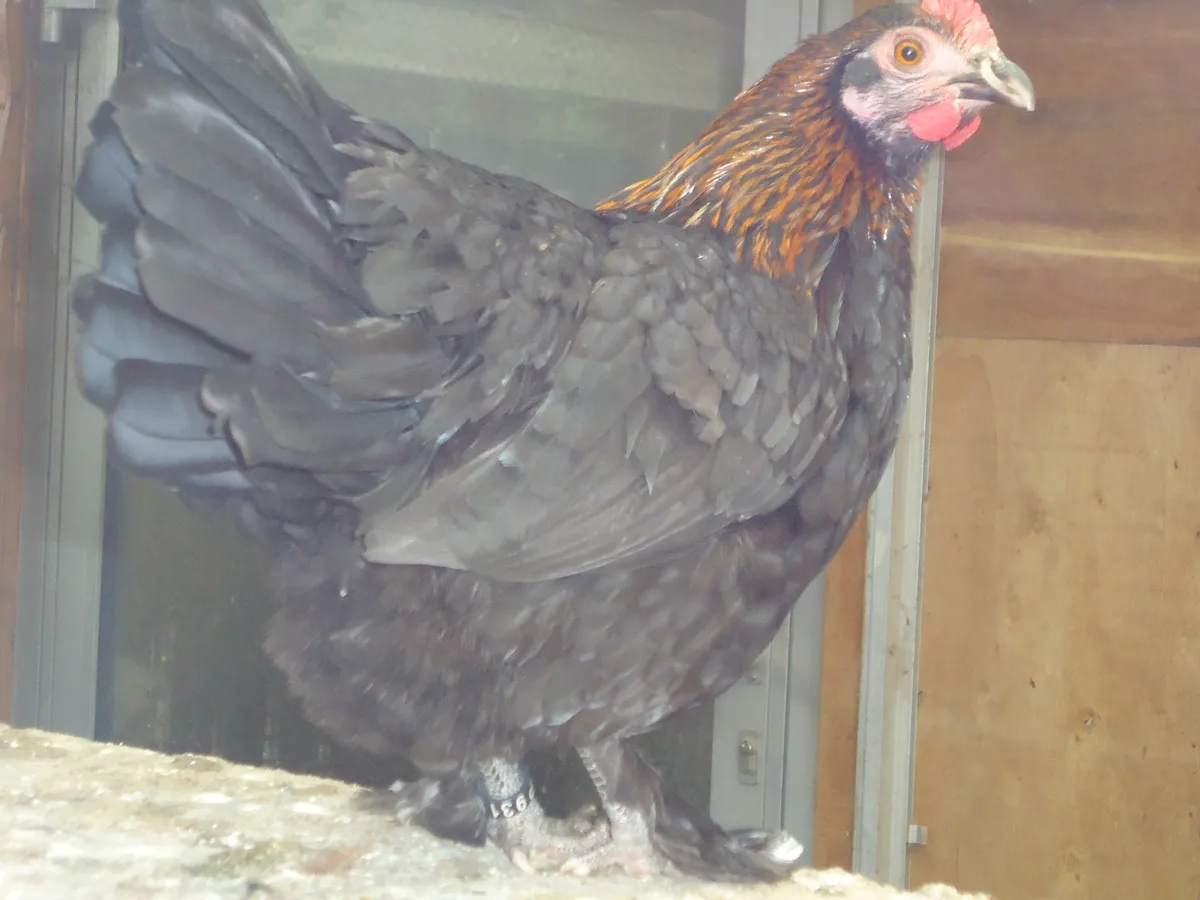
Photo: Uikitireza, CC BY-SA 4.0, via Wikimedia Commons, cropped

UW–Madison describes the Marans eggshell as "very dark reddish brown," and Poultry Extension calls it "dark, chocolate-colored." Oklahoma State says the Black Copper variety has some of the darkest coloring. Expect about three large eggs a week (Oklahoma State). Black Copper Marans profile.
Welsummer
UW–Madison lists the Welsummer's eggshell as dark brown, Ohio State as very dark brown, and Oklahoma State describes reddish-brown eggs that are often speckled. Welsummer profile.
Barnevelder
UW–Madison calls Barnevelders "good layers of dark-brown eggs," and Oklahoma State describes the shell as reddish brown. The hens' double-laced feathers are a bonus. Barnevelder profile.
Brown eggs
Most classic backyard breeds lay brown eggs, in shades from light to dark: the Rhode Island Red, Barred Plymouth Rock, Buff Orpington, Wyandotte, Speckled Sussex, Jersey Giant, New Hampshire, Delaware and more. Their profiles list each breed's sourced shade and yearly egg count.
Cream and tinted eggs
- Silkie: cream or tinted eggs, according to Oklahoma State, though Silkies lay few of them. Silkie profile.
- Salmon Faverolles: UW–Madison lists light brown, and Illinois Extension says Faverolles lay tinted rather than white eggs. Faverolles profile.
- Australorp: the Livestock Conservancy says tinted to light brown, though other sources simply say brown. Australorp profile.
White eggs
- White Leghorn: Poultry Extension calls it the principal white egg producer, and University of New Hampshire Extension puts it at 250 to 300 eggs a year. Leghorn profile.
- Polish: white eggs, according to UW–Madison, from a bird with a spectacular crest. Polish profile.
Plan a rainbow egg basket
A simple mix covers most of the rainbow:
| Color | Pick one of | Notes |
|---|---|---|
| Blue | Ameraucana | A standardized breed |
| Green, blue or pinkish | Easter Egger | A mix; every hen differs |
| Olive | Olive Egger | A blue × brown cross |
| Chocolate | Marans, Welsummer or Barnevelder | Welsummer eggs are often speckled |
| Brown | Rhode Island Red, Barred Rock, Orpington | Calm, beginner-friendly picks |
| White | White Leghorn | The top white-egg layer |
A few practical tips:
- Check temperament as well as egg color. Ameraucana temperament reports differ (Oklahoma State calls them docile, Mississippi State lists them as nervous and aggressive), and Leghorns are flighty. Our guide to the best chickens for beginners covers the calmest breeds.
- Plan the space. Big breeds need more room than small ones, and the Coop Size Calculator adds up the space for a mixed flock, breed by breed.
- Track who's laying. Log each day's eggs in our free Egg Log.
Sources
- UW–Madison Extension: Exhibiting Eggs as a 4-H or FFA Project
- University of Wisconsin–Madison Extension A2880: Chicken Breeds and Varieties
- Poultry Extension: Selecting a Chicken Breed for Small or Backyard Flocks
- Poultry Extension: Raising Chickens for Egg Production
- UF/IFAS AN232: Selecting Chickens for a Backyard Flock
- University of Maine Cooperative Extension Bulletin 2104
- University of New Hampshire Extension: Producing Your Own Eggs
- Ohio State University: Chicken Breed Selection
- Mississippi State University Extension P3036
- Oklahoma State University: Breeds of Livestock, Ameraucana, Marans, Silkie, Welsummer and Barnevelder
- University of Illinois Extension: History of Breeds
- The Livestock Conservancy: Australorp