Ameraucana
The true blue-egg breed: bearded, muffed and pea-combed, bred to a standard (unlike the Easter Egger).
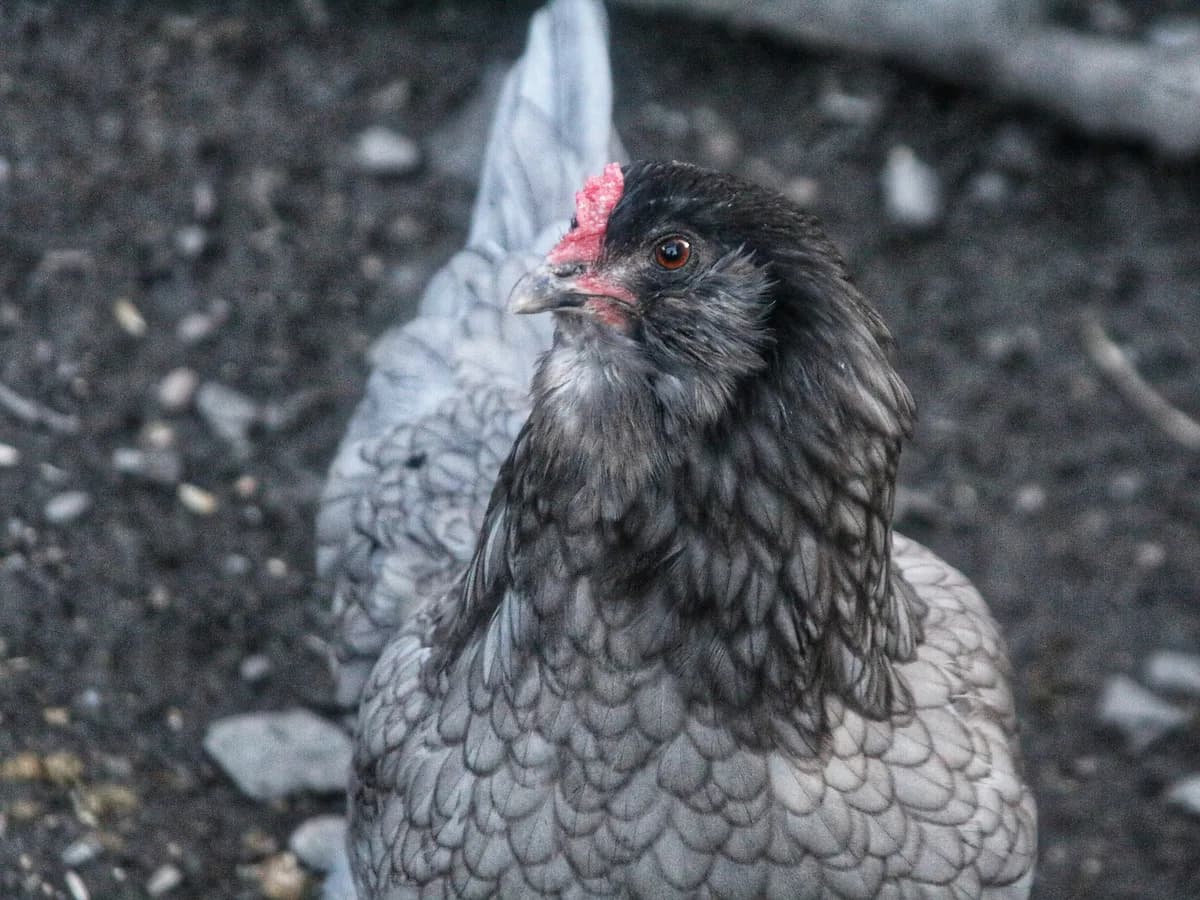
Photo: J. Tönz, CC BY-SA 4.0, via Wikimedia Commons, cropped

Ameraucana at a glance
Medium, dual-purpose
- Status
- APA breed, All Other Standard Breeds class (large fowl); bantams too. Year admitted not sourced.[1]
- Origin
- Developed in the United States in the 1970s from Araucanas imported from Chile in the 1930s.[2][3]
- Eggs per year
- 180–200 (UNH, for Ameraucanas and Easter Eggers)[5]
- Egg size
- Large[4]
- Bantam
- Yes, in every variety.[1]
- Temperament
- Sources disagree: Oklahoma State calls them docile and sweet, while Mississippi State lists them as nervous and aggressive and Rutgers says they can be aggressive.[6][3][7]
- Broodiness
- Not especially broody, according to Oklahoma State.[6]
Facts no source backs up are left out. Updated October 26, 2026 (how we check).
If you want a carton of blue eggs from a bird that's an actual breed, the Ameraucana is the one. It's bred to a standard, with a fluffy beard and muffs, a small pea comb and a set list of color varieties.
An American breed from Chilean stock
UW–Madison Extension says the Ameraucana was developed in the United States in the 1970s from Araucanas imported in the 1930s, and Mississippi State notes the Araucana came from Chile. Breeders kept the blue-egg gene while setting a new standard. The American Poultry Association lists it in the All Other Standard Breeds class, in both large fowl and bantam.
Ameraucana vs. Easter Egger
This is the question everyone asks. An Ameraucana meets a written breed standard. An Easter Egger is a mixed bird that carries the colored-egg gene but doesn't conform to any standard. UW–Madison warns that many hatcheries sell birds as "Ameraucanas/Easter Eggers," so if your chicks grow up in a rainbow of patterns, they're Easter Eggers.
UW–Madison adds that leg color matters on a real Ameraucana: yellow soles on the feet are a show disqualification.
Eggs
UW–Madison lists the eggshell as blue/pastel; Ohio State says blue/green and rates the eggs large. University of New Hampshire Extension puts Ameraucanas and Easter Eggers together at 180 to 200 eggs a year.
Track your blue eggs in our free Egg Log, and time your pullets' first egg with the Laying Calculator.
Temperament: sources disagree
This is where you'll hear different stories. Oklahoma State calls Ameraucanas "docile and sweet." Mississippi State's temperament table lists them under both "nervous (flighty)" and "aggressive," and Rutgers says they can be aggressive. Expect individual birds to vary.
Oklahoma State adds that they aren't especially broody, which suits keepers who want eggs rather than chicks.
Size
The standard weight is 6.5 lb for a rooster and 5.5 lb for a hen (UW–Madison). Mississippi State gives an adult range of 4.5 to 6.5 lb. Bantams exist in every variety.
Varieties
UW–Madison and Ohio State list eight: Black, Blue, Blue Wheaten, Brown Red, Buff, Silver, Wheaten and White. The current APA list also includes Self Blue.
How to recognize an Ameraucana
Look for a beard and muffs, a small pea comb and white skin (UW–Madison), and slate-blue legs (Oklahoma State). Oklahoma State notes that instead of the Araucana's ear tufts, Ameraucanas have muffs and a beard.
Is an Ameraucana right for you?
Choose an Ameraucana if you want blue eggs from a standardized breed and care about the look. If any colorful egg will do, an Easter Egger is easier to find. For olive eggs, read about the Olive Egger, a cross that often uses a blue-egg parent.
See every egg shade side by side on our free Egg Color Chart printable.