New Hampshire
A chestnut-red breed selected from Rhode Island Reds, with brown eggs and broody, motherly hens.
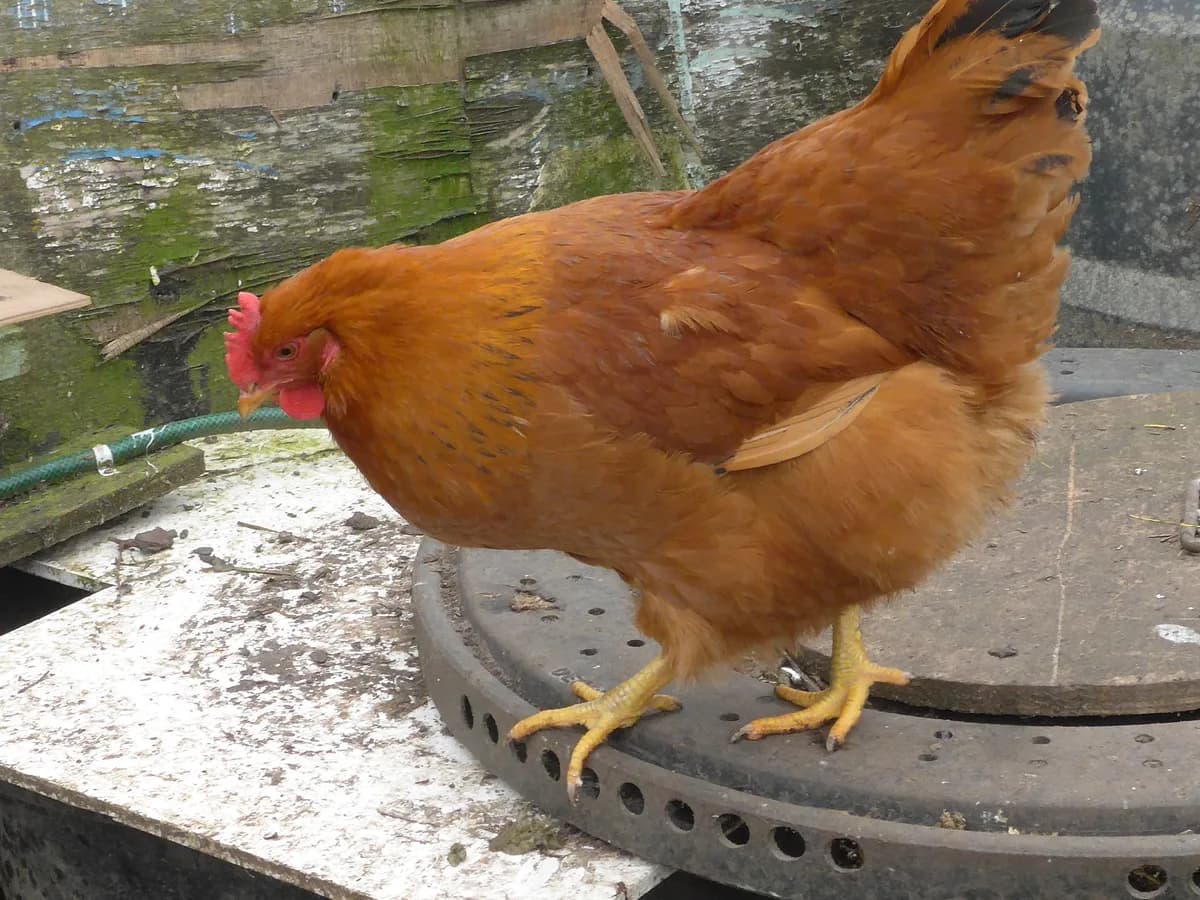
Photo: Arie M. den Toom, CC BY-SA 4.0, via Wikimedia Commons, cropped

New Hampshire at a glance
Medium, dual-purpose
- Origin
- Selected from Rhode Island Reds, chiefly in Massachusetts and New Hampshire, beginning around 1915.[2][5]
- Eggs per year
- About 200–220[3]
- Weight
- Standard 8.5 lb rooster, 6.5 lb hen. Backyard birds usually weigh 6.5 to 8.5 lb.[2][6][3][7][8]
- Bantam
- Yes.[4]
- Temperament
- Varies by strain: the Livestock Conservancy calls them usually family-friendly, but UW–Madison says they are competitive and aggressive.[3][2]
- Good for beginners
- The Livestock Conservancy calls them usually good for beginners (strains vary).[3]
- Cold
- Known for cold tolerance, and can do well in warm climates if housed well.[3]
- Conservation
- Listed as Threatened by the Livestock Conservancy.[3]
Facts no source backs up are left out. Updated October 26, 2026 (how we check).
The New Hampshire is a chestnut-red American breed that started life as a Rhode Island Red. Today it's a breed in its own right, with brown eggs, motherly hens and a Livestock Conservancy listing that makes every flock count.
Out of the Rhode Island Red
UW–Madison Extension describes the New Hampshire as "a specialized selection out of the Rhode Island Red breed," made chiefly in Massachusetts and New Hampshire. Illinois Extension says the work began around 1915. The American Poultry Association admitted the New Hampshire in 1935, in the American class, with one variety.
Eggs
The Livestock Conservancy puts the New Hampshire at about 200 to 220 eggs a year. The shells are brown: Mississippi State says brown to dark brown, the Livestock Conservancy says tinted to brown, and UW–Madison notes some strains lay dark-brown eggs. Size is large (Livestock Conservancy) or extra large (Ohio State).
Log every egg in our Egg Log, and see when pullets should start with the Laying Calculator.
Broody, motherly hens
UW–Madison says New Hampshire hens "are prone to go broody, and make good mothers," and Mississippi State agrees. The Livestock Conservancy notes it depends on the strain. If you'd like to hatch chicks under a hen, this is a good breed for it.
Hatching? Our Hatch Countdown gives the due date, candling days and lockdown day.
Temperament: depends on the strain
Here sources differ. The Livestock Conservancy calls the New Hampshire "usually a family-friendly chicken and good for beginners," but warns that "different source stocks can vary from gentle and docile to unfriendly and even aggressive." UW–Madison describes them as competitive and aggressive. Ask breeders about temperament before you buy.
Size and climate
The standard weight is 8.5 lb for a rooster and 6.5 lb for a hen (UW–Madison, UF/IFAS, Livestock Conservancy); Mississippi State says adults weigh 6.5 to 8.5 lb. Bantams exist.
The Livestock Conservancy says New Hampshires are known for cold tolerance and can do well in both cold and warm climates if housed appropriately.
Conservation
The Livestock Conservancy lists the New Hampshire as Threatened. That's a good reason to keep them, and to buy from heritage breeders.
How to recognize a New Hampshire
The Livestock Conservancy describes brilliant chestnut-red plumage with a black tail and black-edged wing feathers, and yellow skin, shanks and feet with no leg feathers. UW–Madison says the color is medium to light red and often fades in the sun, and the hen's single comb often lops over a bit. UF/IFAS lists red earlobes.
Is a New Hampshire right for you?
Choose New Hampshires for brown eggs, good mothers and a heritage breed that needs keepers. For the deeper-red original, see the Rhode Island Red. New Hampshire roosters are also a common sire of red sex-link hens.
See where its eggs fit on our free Egg Color Chart printable.