How to Keep Chicken Water From Freezing in Winter
Updated October 26, 2026 · Fact-checked against university extension sources (how we check)
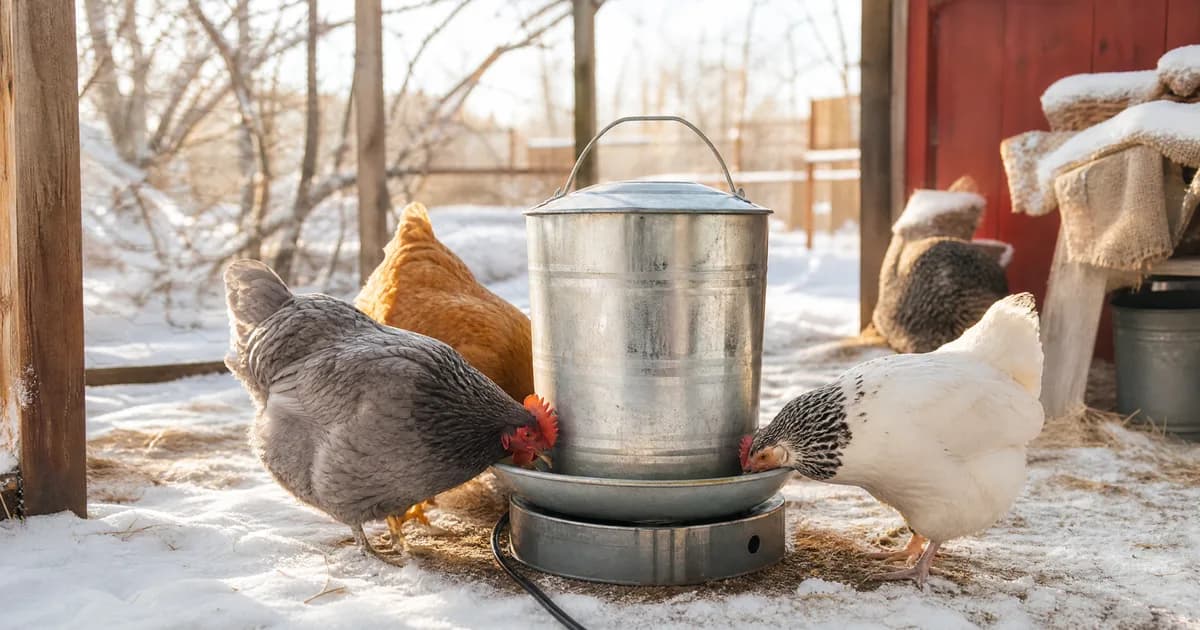
On a freezing morning, the waterer is the first thing to check. Chickens can't peck through ice, and a single day without water shows up in the egg basket. Here's how to keep water flowing all winter, from simple tricks to heated waterers, with the safety steps that go with them.
Why winter water matters
Water matters more than anything else you give your flock. UW–Madison Extension says "water is the most important concern for chickens," and that they drink "about 2 pounds of water (about a quart) for every pound of feed they eat."
It also matters for eggs. University of New Hampshire Extension says "one day without water for any reason will result in less egg production the next few days as eggs are 75% water." (UW–Madison puts it at "more than 70% water.") Illinois Extension says "chickens need access to water at least every 10 hours, day and night."
Frozen water doesn't count. Maryland Extension notes that water "frozen over is not available to the birds and they cannot break through the ice."
If your hens have slowed down this winter, our guide to why chickens stop laying walks through water and the other common causes, and the Egg Log shows whether the drop lines up with a cold snap.
How much do they drink?
Utah State Extension says that in cool weather "each adult chicken will consume about 0.05 to 0.08 gallon per day," and that a 1-gallon drinker "will provide enough daily water for 12 to 15 adult chickens during cool weather." Maryland notes that "water consumption typically declines in the winter," but birds still need it every day.
Ways to keep water from freezing
Heated bases and heated waterers
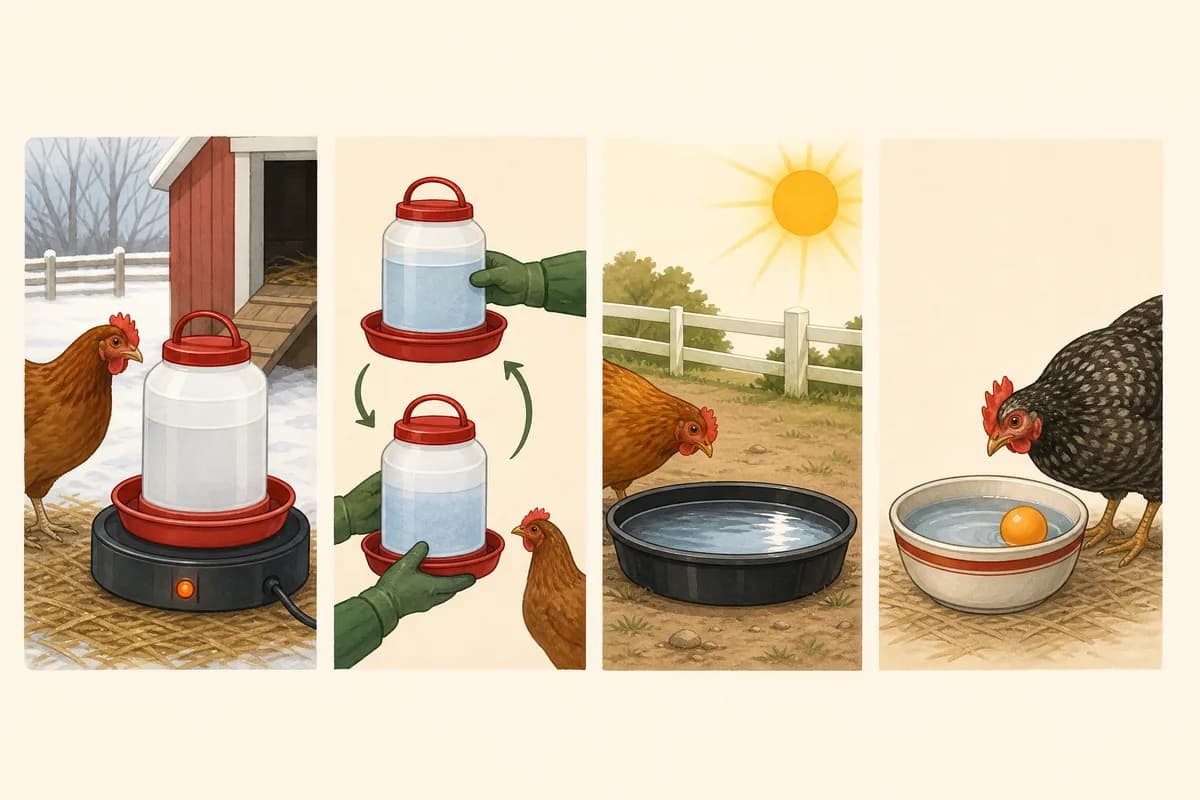
The most reliable option is electric. Illinois Extension suggests "installing a heater in the waterer or by using heated a water bowl," and UW–Madison notes "heated bases for waterers are available." Maryland describes a heater "that goes under the waterer," which needs an electrical source.
Two waterers, swapped
No power? UW–Madison suggests you "have two waterers, so they can be alternated and the other one brought inside to thaw."
Black rubber pans in the sun
Maryland recommends placing "black rubber tubs in sunlight" because they absorb the heat, "will not crack" and are easy to break the ice out of. UW–Madison agrees that with rubber pans "ice can be removed easily without damaging the pan." UNH warns that "plastic waterers may crack or become brittle during cold months if they are allowed to ice over."
Keep the water moving
Maryland suggests keeping the water agitated, noting that "ping pong balls will float and help keep water from freezing," and lists a soda bottle filled with salt water placed in the water bowl as another trick.
Insulated containers and warm water
UW–Madison says "highly insulated water containers are available that will keep warm water unfrozen for several hours." UNH adds that birds "drink more water in winter if it is 50° F," so taking the chill off can help.
A sunroom
Maryland suggests creating a sunroom from old windows or clear plastic, which "acts as a greenhouse and will heat itself from sunlight."
Check it at least twice a day
Whatever method you use, keep checking. Ohio State Extension says to "change the water twice per day, and change the water more often on colder days," and to check it "in the evening for frozen water so the birds have water available for the full 24-hour time." Maryland says to check or replace water "several times a day" in a hard freeze. Even automatic waterers "can freeze if not heated or insulated," Ohio State notes.
Fire and electrical safety
Heated waterers sit in dry bedding, so treat them with care.
- They can fail. Ohio State warns that heated bowls "may malfunction and cause a fire."
- Check the fit. Maryland says to be sure the heated base "will not melt or damage your water receptacle, or start a fire if it comes in contact the litter."
- Cords up and out of reach. Illinois says to "make sure the electrical cords and connections are off the floor and not accessible to the chickens." South Dakota State Extension says cords on heater tanks "should be inspected regularly for wear."
- Plan your power. Barn-safety guidance from NDSU and the NFPA checklist (summarized by South Dakota State) discourages extension cords and calls for GFCI-protected outlets.
UW–Madison mentions keepers hanging heat lamps over waterers, and Maryland lists it as an option, but both warn about the risks: Maryland says splashing cold water on a hot bulb can shatter it. Given the fire risk of heat lamps in a coop, we'd choose a heated base instead. Our guide to whether chickens need heat in winter explains the heat lamp risks in more detail.
Keep spills out of the litter
Leaks and spills make wet litter, and wet litter means ammonia and damp air. Ohio State says to "check these waterers for leaks that can contribute to increased humidity problems in the coop." Maryland suggests keeping perches away from food and water to prevent droppings in them. For more on a dry winter coop, read winter coop ventilation.
Planning a new setup? Our Coop Size Calculator works out the space your flock needs, so waterers and feeders aren't crowded.
Sources
- UW–Madison Extension: Preparing for Winter
- University of New Hampshire Extension: Producing Your Own Eggs
- University of Illinois Extension: How to Care for Backyard Chickens in Winter
- University of Maryland Extension FS-1133: Winter Weather and Small Flocks
- Ohio State University Extension ANR-66: Winter and Your Backyard Chickens
- Utah State University Extension: Basics for Raising Backyard Chickens
- NDSU Extension: Take Precautions When Using Heat Lamps
- South Dakota State University Extension: Electrical Safety in the Barn