Chicken Frostbite: Signs, Prevention and Care
Updated October 27, 2026 · Fact-checked against university extension sources (how we check)

A rooster with a black-tipped comb after a cold snap is one of winter's most common sights in a backyard flock. Frostbite is usually preventable, and the fix is less about heat than about dry air. Here's how to spot it, prevent it and care for a bird that gets it, from university extension sources.
What frostbite is
Poultry Extension explains that "frostbite results when the fluid in tissues freezes, damaging cells to the point that the cells die." Ohio State University Extension says it causes "changes in color and texture" in the affected area.
Where it happens
It's "most common on combs, wattles, and feet" (Ohio State). Those are the parts with no feathers to keep them warm.
Who gets it
- Roosters. Poultry Extension says frostbite "is most common in roosters because they typically have larger combs and wattles."
- Big-combed breeds. Illinois Extension says "chickens with large combs or wattles are more susceptible," and Maryland Extension names "Leghorns and Minorca's and other Mediterranean breeds." Ohio State notes a large comb can be a problem even "in an otherwise cold-tolerant breed."
When it happens
Poultry Extension says frostbite becomes a problem "with extremely low temperatures (single digits and below)," and that it's "more likely to occur during the nighttime hours in a cold, poorly ventilated coop with damp bedding."
Moisture is the key. Ohio State says "humid air creates more frostbite risk than drier air," and Maryland adds that "damp air feels much colder than dry air."
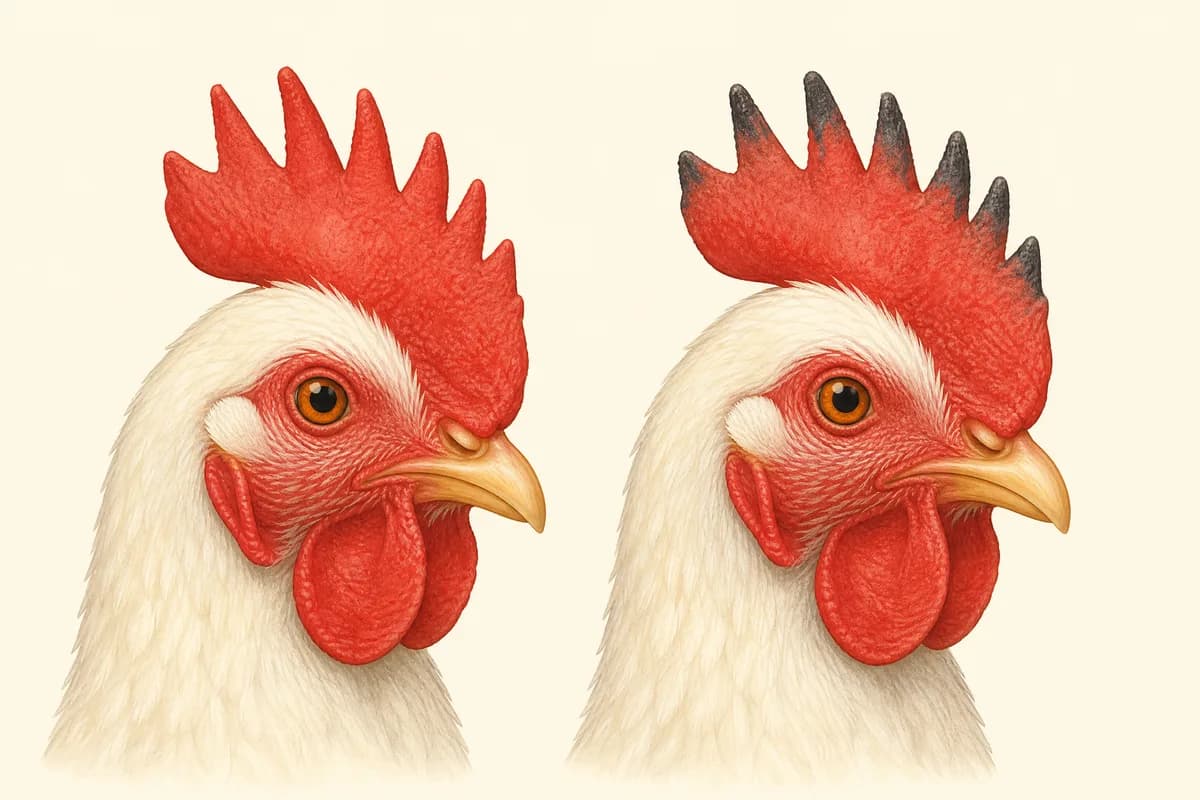
Signs of frostbite
Ohio State says "gray, black, or brittle areas are indicators of frostbite." Look at the tips of the comb points, the edges of the wattles and the toes, especially on roosters, after the coldest nights.
Watch for infection as it heals. Poultry Extension lists "swelling, increased redness, discharge from the wound, and a bad odor" as signs of infection.
How to prevent frostbite
Keep the air dry
This matters most. Poultry Extension says "proper ventilation is necessary to prevent moisture and ammonia increases," and that "if there is condensation on windows or uninsulated walls of the coop in the morning, ventilation must be increased." Our guide to winter coop ventilation explains how to vent without drafts.
Stop drafts on the roost
Illinois Extension says "you should never see air moving the chicken's feathers in the coop during the winter." Close gaps near roost level and keep vents high.
Keep litter dry
Poultry Extension suggests you "top dress the bedding as needed throughout winter to keep it dry." Replace wet spots around waterers, and see how to keep chicken water from freezing for spill-free winter watering.
Protect the feet
Maryland recommends roosts with "a flat surface (like a 2x4) that will allow the birds to cover their feet with their feathers," and wood rather than metal or plastic pipe, which "will conduct the cold to the feet." Ohio State suggests you "remove the snow from the chicken run or straw areas to protect their feet when outdoors."
Petroleum jelly: some help
Illinois says "applying petroleum jelly to large wattles and combs will reduce the chance for frostbite," and Maryland agrees. Poultry Extension puts it in perspective: "For mild freezing, petroleum jelly helps, but coop management is the real key."
Heat isn't the answer
Heat lamps bring a serious fire risk; our guide on whether chickens need heat in winter explains why most flocks do better without one.
Choose breeds with small combs
If you live where winters are hard, comb shape is worth thinking about. Rutgers Extension warns that "combs can get frost bite" and suggests a small comb variety in cold areas. Oklahoma State notes the Wyandotte's rose comb doesn't freeze as easily as a single comb, and UW–Madison says the Brahma's pea comb and feathered feet "enable them to stand cold temperatures very well."
Small-combed breeds in our directory include the Wyandotte and Dominique (rose combs), and the Brahma and Ameraucana (pea combs). The Rhode Island Red also comes in a rose-comb variety. See our full list of cold-hardy chicken breeds, or filter the Breed Directory for breeds that handle cold winters.
What to do if a chicken gets frostbite
- Bring the bird somewhere warm. Ohio State says to bring the animal "into a warm space, slowly warming the affected extremity."
- Warm slowly. "Do not attempt rapid warming of the affected area as this may cause further damage" (Ohio State). Poultry Extension adds: "Do not use direct heat, such as a hair dryer or heat lamp."
- Feet can soak; combs can't. Ohio State says "gentle use of warm—not hot—water foot soaks to warm the feet may be beneficial, but do not attempt on the comb or wattle."
- No pain pills. Poultry Extension warns that oral pain medicines "are not needed; some are lethal to chickens."
- Watch and wait. Poultry Extension says "healing from frostbite can take four to six weeks." Ohio State says to "contact your veterinarian if you suspect infection."
Then fix the cause, usually damp air or a draft, so it doesn't happen again.
Sources
- Poultry Extension: Frostbite in Chickens
- Ohio State University Extension ANR-66: Winter and Your Backyard Chickens
- University of Maryland Extension FS-1133: Winter Weather and Small Flocks
- University of Illinois Extension: How to Care for Backyard Chickens in Winter
- Rutgers Cooperative Extension: Small Farm Chicken Breeds
- Oklahoma State University: Breeds of Livestock, Wyandotte
- University of Wisconsin–Madison Extension A2880: Chicken Breeds and Varieties