Dominique
America's oldest breed: a calm, hardy, barred hen with a rose comb, often mistaken for a Barred Rock.
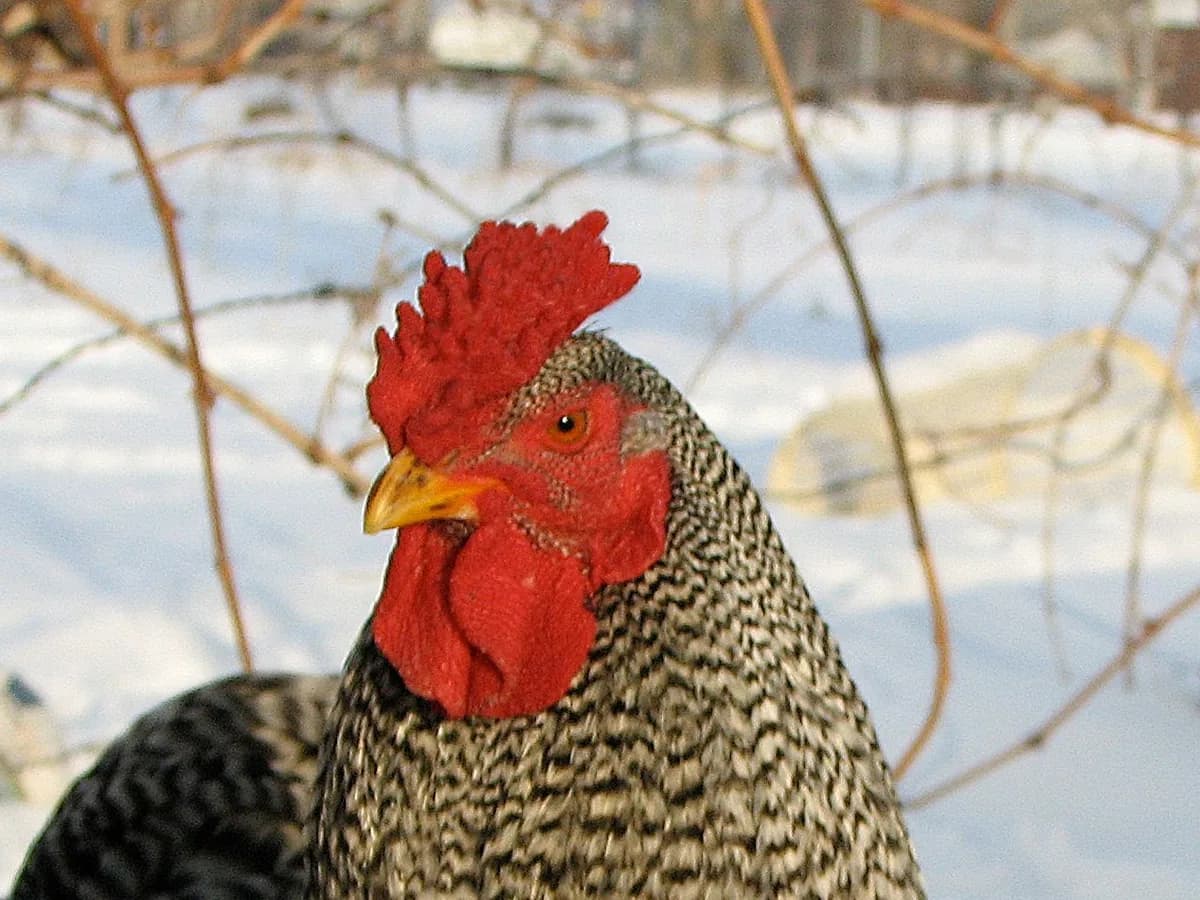
Photo: JapanBreakfast (en.wikipedia), CC BY-SA 3.0, via Wikimedia Commons, cropped

Dominique at a glance
Lightweight
Facts no source backs up are left out. Updated October 26, 2026 (how we check).
The Dominique is a living piece of American history: UW–Madison Extension calls it "the oldest breed developed in the United States." It's a calm, hardy, barred hen that's easy to mistake for a Barred Rock until you look at the comb.
America's oldest breed
Illinois Extension says the Dominique was probably selected from the many hawk-colored or gray fowl kept in the New England states. The American Poultry Association admitted it in 1874, in the American class, with just one variety. Bantams are recognized too.
Oklahoma State notes the breed was very rare for many years but is no longer a "lost breed."
Dominique vs. Barred Rock
Both are black-and-white barred, so here's the quick test: the Dominique has a rose comb (Oklahoma State calls it characteristic), while the Barred Plymouth Rock has a single comb. Illinois Extension notes that the single-combed hawk-colored fowl used to create the Barred Rock "was not the American or Rose-Comb Dominique." Ohio State calls the Dominique's irregular barring a cuckoo pattern.
Eggs
Dominiques lay brown eggs (UW–Madison), which Oklahoma State describes as light to dark brown. Ohio State rates them large. Oklahoma State puts production at around 100 to 150 eggs a year, so they're steady rather than prolific.
They're on the light side, so the Laying Calculator uses its lightweight setting. Then let the Egg Log keep count.
Temperament
Mississippi State calls Dominiques "docile, hardy, and good foragers," and lists them as friendly. Oklahoma State says they are "generally calm by nature and are easy to work with and show." That makes them a nice fit for families.
Broodiness
Mississippi State and Rutgers describe "moderate mothering instincts." Oklahoma State says the hens are good mothers but "show less tendency toward broodiness than many other exhibition breeds."
Hardiness and size
Oklahoma State says Dominiques are hardy and that their heavy plumage protected them in cold weather; Ohio State says they adapt well to climates. The standard weight is 7 lb for a rooster and 5 lb for a hen (Oklahoma State); Mississippi State says adults weigh 4 to 7 lb.
How to recognize a Dominique
Irregular black-and-white barring over the whole body (UW–Madison, Oklahoma State), a rose comb and yellow skin (Illinois Extension). UW–Madison adds the feathers are tightly held.
Is a Dominique right for you?
Choose Dominiques for a calm, hardy, historic breed with brown eggs. For a bigger barred bird that lays more, compare the Barred Plymouth Rock; for another heritage American, see the Delaware.
See every breed's egg color on our free Egg Color Chart printable.